
What Is Manufacturing Process Automation? Types, Benefits, Use Cases, and 7 Implementation Steps
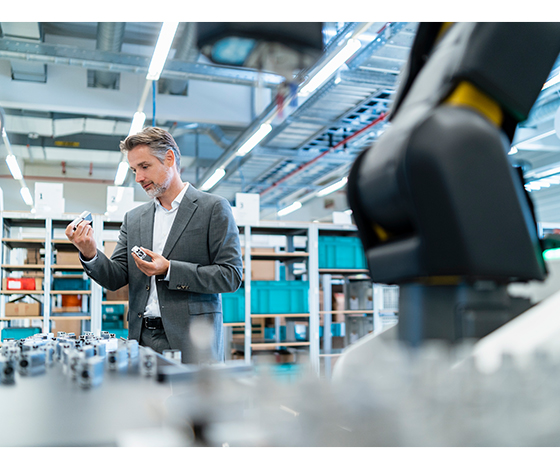
Manufacturers face pressure to increase output, maintain consistent product quality, control operating costs, and respond quickly to changing production demands. Labor shortages, aging equipment, and increasingly complex production systems add further operational challenges. Automation helps manufacturers execute production tasks with less manual intervention while improving visibility and control.
This guide explains the major types of manufacturing process automation, how automation differs across production environments, key benefits and smart factory applications, and seven practical steps for implementation.
What is Manufacturing Process Automation?
Manufacturing process automation is the use of industrial control and computing technologies to automatically monitor, control, and execute manufacturing operations.
Automated systems can collect sensor data, control equipment, move materials, inspect products, and trigger predefined responses according to real-time production conditions.
Common technologies include programmable logic controllers (PLCs), programmable automation controllers (PACs), industrial PCs, human-machine interfaces (HMIs), industrial input/output (I/O) systems, motion controllers, machine vision systems, industrial robots, and Industrial Internet of Things (IIoT) platforms.
In most manufacturing environments, automation targets repetitive, precision-sensitive, hazardous, or data-intensive operations while operators and engineers focus on supervision, troubleshooting, and process improvement.
4 Main Types of Manufacturing Automation
Manufacturing automation can be categorized according to how equipment and control systems are configured to handle production volume, product variation, and changeovers.
Fixed automation uses dedicated equipment and predefined sequences for high-volume, repetitive production. It is commonly applied where products and processes change infrequently.
Programmable automation allows equipment to be reprogrammed for different products or production batches. This approach is useful where manufacturers produce multiple variants but can accommodate planned changeover time.
Flexible automation supports greater product variation with shorter changeovers. Equipment, controls, and software can adapt more quickly as production requirements change.
Integrated automation connects multiple machines, control systems, data sources, and software platforms into a coordinated production environment. This can extend automation beyond individual machines to production cells, lines, or broader factory operations.
Manufacturing Automation Across Discrete, Batch, and Continuous Production
Manufacturing automation also varies according to the production environment. Discrete, batch, and continuous manufacturing involve different materials, workflows, control requirements, and automation technologies.
| Manufacturing Environment | How Production Works | Typical Industries | Common Automation Technologies |
|---|---|---|---|
| Discrete Manufacturing | Individual products move through defined production steps | Electronics, automotive, machinery | PLC, PAC, motion control, robotics, machine vision |
| Batch Process | Products are made in defined quantities according to recipes or sequences | Food, pharmaceuticals, specialty chemicals | Batch control, sensors, HMI, recipe management |
| Continuous Process | Materials continuously flow while process variables are constantly controlled | Chemical, energy, water treatment | Process controllers, Distributed Control System (DCS), sensors, Supervisory Control and Data Acquisition (SCADA) |
Discrete manufacturing automation deals with individual, countable products. Production may involve detecting a component, positioning it, performing an assembly task, inspecting the result, and transferring it to the next workstation. Robotics, motion control, machine vision, sensing, and real-time industrial communication are therefore common technologies in discrete manufacturing.
Batch process automation controls production according to defined quantities, sequences, and recipes. The ISA-88 batch control standards provide common models and terminology for equipment structures, recipes, and batch production information.
Continuous process automation manages processes in which variables such as temperature, pressure, flow, or level require continuous control. ISA-106 guides automating procedures in continuous process operations.
Automation can therefore take different forms across discrete, batch, and continuous production. The application examples later in this guide focus primarily on discrete manufacturing and smart factory applications, including machine automation, robotics, machine vision, material handling, and edge computing.
Key Advantages of Manufacturing Process Automation
Increased Productivity and Efficiency
Automation reduces repetitive manual handling, shortens cycle times, and coordinates production stages more efficiently.
For example, an automated production cell can integrate machine loading, robotic assembly, inspection, and unloading. Real-time equipment data also helps manufacturers identify idle or underperforming machines and improve utilization.
Enhanced Product Quality and Consistency
Automated systems can improve assembly accuracy, maintain consistent machine parameters, detect defects, and collect digital quality records.
Machine vision enables inspection directly on the production line, allowing manufacturers to identify quality issues in the production process.
Reduced Operational and Labor Costs
Automation can reduce manual effort across repetitive production, inspection, material transport, and monitoring tasks.
Manufacturers should assess the total lifecycle value of an automation project, including hardware, software, system integration, maintenance, networking, cybersecurity, and employee training.
Improved Workplace Safety
Automation can reduce worker exposure to hazardous production conditions. Industrial robots and automated equipment can support machine tending, heavy material handling, welding, repetitive assembly, and pallet movement.
Industrial robot systems require system-level safety measures. Key considerations include safe design, risk reduction, and appropriate safety information.
Sensors, safety controllers, emergency-stop mechanisms, risk assessment, and functional safety therefore remain important components of automated production environments. The ISO 10218-2:2025 standard addresses industrial robot application and robot cell safety requirements.
Core Applications and Use Cases in Smart Factories
Four common discrete manufacturing applications are automated inspection, robotic assembly, material handling, and equipment maintenance.
1. Quality Control with Machine Vision
Machine vision uses cameras, lighting, industrial computing, and image-processing software to automatically inspect products.
Typical applications include:
- Surface and dimensional defect inspection
- Component presence and assembly verification
- Label and barcode inspection
- Packaging quality inspection
A camera captures product images on the production line, while a local computing system evaluates whether predefined quality requirements are met.
Rule-based machine vision is commonly used for predefined inspection criteria, while AI-based approaches offer added flexibility when visual patterns or defects vary. Edge computing enables these inspection decisions to occur close to production equipment.
2. Robotic Arms for Assembly Processes
Industrial robots automate repetitive or precision-sensitive movements such as pick-and-place, assembly, screwdriving, welding, dispensing, machine tending, packaging, and palletizing.
A robotic automation system combines motion controllers, servo systems, sensors, industrial computing, machine vision, and industrial networking to coordinate robot movement and production tasks.
At COMPUTEX 2026, NEXCOM demonstrated a dual-arm smart manufacturing system that combines AI vision-based trajectory planning with real-time robotic motion control for precision assembly, showing how visual perception, edge AI, and deterministic control can work together in the same manufacturing application.
3. Material Handling with AGVs and AMRs
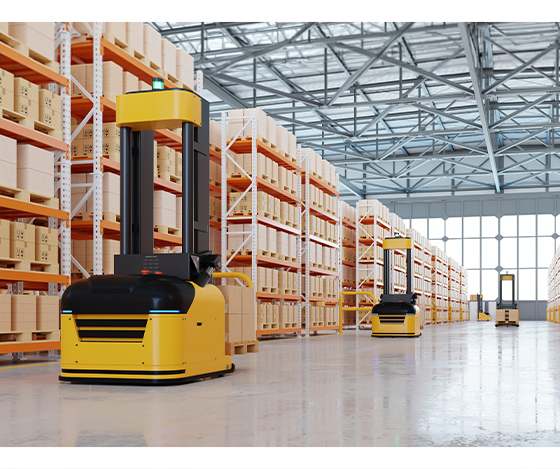
Automated Guided Vehicles (AGVs) typically follow predefined routes or navigate within constraints. Autonomous Mobile Robots (AMRs) generally use onboard sensing, localization, mapping, and dynamic path planning for greater flexibility in changing environments.
Both can automate raw-material delivery, line-side replenishment, work-in-process transfer, and finished-goods transportation.
Reliable industrial computing, communications, fleet management, cybersecurity, and factory-system integration are important supporting elements for automated material handling.
4. Condition Monitoring and Predictive Maintenance
Predictive maintenance uses equipment data to identify signs of deterioration before failure. Manufacturers may monitor:
- Vibration and temperature
- Motor current and energy consumption
- Pressure and other process conditions
- Cycle time and operating hours
- Machine alarms and abnormal events
Sensors and data acquisition systems collect operating information, while edge computers or analytics systems identify abnormal conditions and trends. When a defined threshold or abnormal pattern is detected, the system can generate an alert or maintenance notification for further investigation.
For example, increasing motor vibration may indicate a developing mechanical issue. Maintenance teams can use this information to prioritize inspections and maintenance based on actual equipment condition.
7 Steps to Implement Manufacturing Process Automation
Step 1: Assess Current Processes
Identify where automation can create measurable value. Good candidates include processes with repetitive manual work, production bottlenecks, high defect rates, frequent downtime, safety risks, or limited equipment visibility.
Also evaluate existing equipment, especially in a brownfield factory, where older machines may remain mechanically reliable but lack modern connectivity. Sensors, industrial I/O, data acquisition systems, or gateways can provide access to machine data while preserving existing production assets.
Prioritize the processes with the greatest potential operational impact.
Step 2: Define Clear Objectives and KPIs
Define specific and measurable automation objectives. Targets may include increasing throughput, reducing cycle time or defect rates, improving Overall Equipment Effectiveness (OEE), lowering unplanned downtime, or improving traceability and safety.
An automated inspection project, for example, can be evaluated by inspection time, defect detection rate, false rejection rate, and production yield. Clear KPIs help manufacturers assess operational value and ROI.
Step 3: Select the Right Automation Technologies
Different manufacturing problems require different technologies.
| Manufacturing Problem | Possible Automation Technology |
|---|---|
| Manual visual inspection | Machine vision / Edge AI |
| Repetitive assembly | Industrial robot + motion control |
| Legacy machine data unavailable | Data acquisition / IIoT gateway |
| Frequent equipment failures | Sensors + edge analytics |
| Manual material transport | AGV / AMR |
| Limited machine or production visibility | Data acquisition + HMI / SCADA / IIoT platform |
Technology selection should consider interoperability, real-time response, industrial conditions, scalability, lifecycle availability, cybersecurity, and functional safety.
Cybersecurity is particularly important in connected Operational Technology (OT) environments, which have unique performance, reliability, and safety requirements. Incorporate these requirements into the automation architecture from the design stage. The NIST SP 800-82 Rev. 3 guidance provides cybersecurity guidance for OT systems.
Step 4: Develop a Strategic Implementation Plan
Before large-scale deployment, manufacturers should define the overall automation architecture, including project scope, budget, hardware and software requirements, networking, legacy equipment integration, cybersecurity, functional safety, implementation timing, workforce training, and success criteria.
System integration is critical because machines, inspection equipment, production software, and control systems need to exchange information across the manufacturing environment.
ISA-95 provides a widely used model for connecting plant-floor control with manufacturing operations and enterprise systems.
Step 5: Conduct Pilot Testing
A pilot can validate an automation concept on one machine, production cell, inspection station, robotic application, or material-handling route.
Evaluate cycle time, accuracy, system integration, network reliability, maintenance requirements, safety, and operator workflow against the KPIs defined earlier.
Step 6: Execute Full Deployment and Workforce Training
Full deployment may include hardware installation, control-system configuration, industrial networking, software integration, system commissioning, cybersecurity configuration, and safety validation.
Train operators, engineers, and maintenance personnel to monitor equipment status, respond to alarms, perform basic troubleshooting, and safely intervene when required.
Step 7: Monitor Performance and Continuously Optimize
After deployment, track metrics such as OEE, throughput, cycle time, defect rate, production yield, downtime, and equipment availability.
Production data can refine control parameters, optimize robotic motion, adjust machine vision models, improve maintenance schedules, and identify additional automation opportunities.
How Manufacturing Automation Is Evolving
Manufacturing automation is expanding beyond individual machines and predefined control sequences as production systems become more connected and data-driven.
IIoT Connects Machines and Production Data
Industrial IoT (IIoT) connects machines, sensors, controllers, industrial computers, and software platforms across the factory. This allows production data to move beyond individual machines and become available for monitoring, analysis, coordination, and integration with broader manufacturing systems.
Edge AI Brings Intelligence Closer to Production
AI and machine learning can extend conventional automation into applications such as visual inspection, anomaly detection, predictive maintenance, robotic perception, and production optimization. Combined with edge computing, time-sensitive data can be processed close to machines and production equipment, while selected results are shared with higher-level systems.
Digital Twins Add Simulation and Operational Context
Digital twins use operational data to create digital representations of machines, assets, or production processes. Manufacturers can use these representations to visualize equipment status, evaluate operating scenarios, simulate production changes, and support maintenance or optimization decisions.
From Machine Control to Factory-Level Optimization
Together, edge AI, IIoT, and digital twins extend automation beyond individual control tasks toward more connected production architectures: Machine control → production data → edge intelligence → operational decisions → factory-level optimization. This progression allows manufacturers to connect automation, computing, and production information across a broader smart factory environment.
Partner with NEXCOM for Your Manufacturing Automation Strategy
Manufacturing automation often spans several architectural layers, from acquiring machine data and controlling equipment to operator visualization, robotics, edge computing, and factory-level integration.
NEXCOM Industry AIoT (NexAIoT Co., Ltd.) provides smart manufacturing technologies across these layers. The nDAS 6000 series acquires machine and process data, nPAC 2000 combines PLC control with edge computing, nHMI provides operator visualization and control, and the iAT3000 AIoT platform connects production data and systems at the factory level. For advanced robotic applications, NEXCOM Robotic Solutions (NexCOBOT Co., Ltd.) provides platforms such as MARS400 for robotic and AI workloads.
This layered approach is particularly relevant to brownfield factories, where manufacturers may begin by connecting existing equipment and then expand automation according to production requirements. Data acquisition, control, visualization, edge intelligence, robotics, networking, and higher-level integration can be added as the architecture evolves.
By treating automation as a connected architecture rather than a collection of isolated machines, manufacturers can create a more scalable foundation for future production requirements. For manufacturing automation, edge computing, robotics, or factory integration requirements, contact NEXCOM to discuss the appropriate architecture for your production environment.
- Related Links:
- NEXCOM Group to Showcase Full-Spectrum Smart Manufacturing Solutions at ISA Automation Summit & Expo 2026
- One Platform, 17 Systems, Zero Blind Spots: How a Taiwanese Snack Manufacturer Took Control of Multi-Plant Operations
- Browse Other News:
- What Is ROS 2? Architecture, ROS 1 vs. ROS 2, and Migration Guide
- What Is Manufacturing Process Automation? Types, Benefits, Use Cases, and 7 Implementation Steps
- All Blog News
