
Understanding SIL2 in Functional Safety Systems
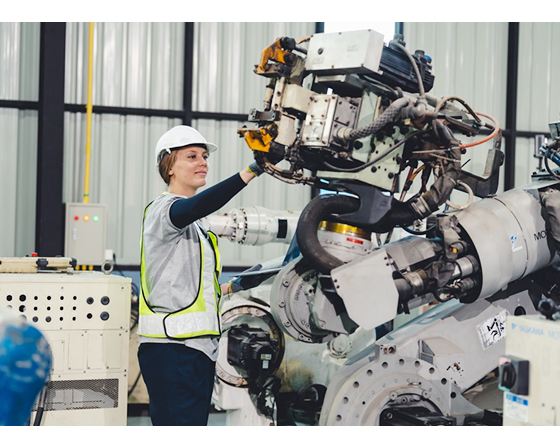
The transition to software-defined manufacturing and collaborative robotics has fundamentally altered the industrial risk profile. In environments where human operators share kinematic workspaces with high-speed machinery, functional safety cannot be an afterthought—it must be architected into the system's core.
For robot builders, system integrators, and production machine manufacturers, understanding SIL2 is essential for designing safety functions that can reduce dangerous failures and support safer machine operation. Whether the system involves a robotic arm, an AI robot controller, a safety and motion controller, or a single production machine, SIL2 helps define the level of reliability required for specific safety functions.
This guide explains when SIL2 is required, how it supports industrial safety, what certification really means, and how NEXCOM Robotic Solutions (NexCOBOT Co. Ltd.) helps build SIL2-ready safety architectures for next-generation automation.
What is SIL 2 and When is SIL 2 Required?
Understanding Its Technical Meaning and Risk Threshold
A Safety Integrity Level (SIL) is a statistical quantification of a Safety Instrumented Function's (SIF) reliability. In this context, SIL 2 is not a subjective "moderate-to-high" safety rating; it is a strict mathematical mandate. SIL 2 requires a Risk Reduction Factor (RRF) of 100 to 1,000, dictating that the system's Probability of Dangerous Failure per Hour (PFH) must remain strictly between 10^-6 and 10^-7.
This target is never selected arbitrarily or because it seems like a practical compromise between SIL 1 and SIL 3. A SIL 2 requirement is derived exclusively through a formal, documented risk assessment, typically utilizing the IEC 62061 hazard matrix. System architects calculate this threshold by evaluating four precise parameters: the biomechanical severity of potential injury (Se), the temporal frequency of exposure (Fr), the probability of the hazardous event occurring (Pr), and the ergonomic possibility of human avoidance (Av).
In discrete manufacturing and industrial robotics, SIL 2 serves as the predominant functional safety benchmark. It is mandated when a robotic cell or automated machine presents severe kinetic hazards that demand highly deterministic control architectures, but where the risk profile does not warrant the strict 1oo2 (one-out-of-two) hardware redundancy universally required by SIL 3.
Risk Scenarios and Operating Environments Suitable for SIL2
SIL2 may be suitable for applications where failure of a safety function could cause injury, equipment damage, production disruption, or unsafe machine behavior.
Common SIL2-related scenarios may include:
- Robotic systems operating near human workers
- Automated production machines with moving parts
- Conveyor systems with access points
- Safety interlocks on machine doors or guards
- Motion control systems requiring safe stop functions
- Deterministic logic solvers tasked with overriding AI robot controllers and initiating a Safe Torque Off (STO) if anomalies are detected
- Safety and motion controller applications in production machinery
- SIL2 production machine architectures where a single manufacturing machine must meet functional safety expectations
For example, a production machine with rotating parts, powered motion, or automated loading mechanisms may require SIL2 safety functions if a risk assessment shows that operator exposure and potential harm are significant. Similarly, a robot builder developing an industrial robot or AI-enabled robot controller may need to design safety functions that support SIL2-level risk reduction.
Relationship Between SIL2 and PL d in Machinery Safety Standards
In machinery safety, SIL2 is often discussed alongside Performance Level d, commonly written as PL d. While SIL and PL are not identical, they are both used to evaluate the reliability of safety-related control functions.
IEC 62061, which defines Safety Integrity Level (SIL) requirements for machinery safety-related control systems, specifies requirements and recommendations for the design, integration, and validation of safety functions in machinery applications. As a machinery-sector standard developed within the framework of IEC 61508, it is commonly used when evaluating whether a safety function can achieve the required SIL level, such as SIL2.
ISO 13849-1, which introduces Performance Level (PL) as another method for evaluating safety-related control systems, focuses on the design and integration of safety-related parts of control systems. While IEC 62061 uses SIL and ISO 13849-1 uses PL, both standards help manufacturers and system integrators determine whether a safety function provides sufficient risk reduction for machinery applications.
For discrete manufacturing and robotics, SIL 2 (IEC 62061) is generally functionally equivalent to Performance Level d (ISO 13849-1). Both standards require advanced diagnostic coverage and typically mandate a Category 2 or Category 3 hardware architecture (single-channel with high diagnostics, or fully redundant dual-channel).
Key Operational Benefits of Implementing SIL2 Systems
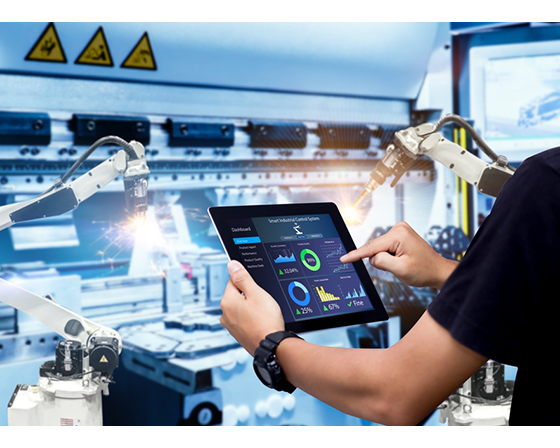
Implementing SIL2 is not only about meeting a safety requirement. A well-designed SIL2 safety architecture can also improve system reliability, reduce unplanned downtime, and make machine operation easier to manage over time.
For manufacturers and robot builders, this matters because safety is closely tied to productivity. Poorly architected safety systems plague facilities with "nuisance trips"—unnecessary machine shutdowns caused by sensor noise or latency. A deterministically engineered SIL 2 architecture eliminates nuisance tripping while ensuring genuine hazards trigger immediate STO.
Significant Reduction of Unpredictable Failure Risks
The primary purpose of SIL2 is to reduce the probability of dangerous failure in a safety function. This means the system is designed to detect or respond to hazardous conditions more reliably.
For industrial automation, this may include safety functions such as:
- Emergency stop
- Safe torque off
- Safe limited speed
- Protective stop
- Guard door interlock
- Safety-rated monitored stop
- Safe shutdown for AI robot controllers
- Motion interruption for safety and motion controllers
By implementing SIL2 safety functions, manufacturers can reduce unpredictable failure risks and create more controlled machine behavior during abnormal conditions.
Built-in Diagnostics and Verification Capabilities Reduce Manual Inspection Effort
SIL2 systems often include diagnostic and verification capabilities that help detect faults before they become dangerous. These diagnostics may monitor input devices, control logic, communication pathways, output devices, and final control elements.
For example, a SIL2-ready safety and motion controller may help monitor whether safety signals are operating correctly. In robotics, an AI robot controller may use edge computing and sensor data to detect abnormal movement, system faults, or unsafe operating states.
This diagnostic visibility can reduce reliance on manual inspection and help maintenance teams identify problems faster. Instead of waiting for a failure to disrupt production, operators can use system feedback to support preventive maintenance and safety validation.
Lower Total Cost of Ownership (TCO) Over Time
Although SIL2 implementation may require more upfront planning than a basic safety design, it can lower total cost of ownership over time.
A SIL2-ready architecture can help reduce:
- Unplanned downtime
- Maintenance troubleshooting time
- Safety-related production interruptions
- Costly redesign after commissioning
- Compliance documentation gaps
- Equipment damage caused by unsafe failure modes
For production machine builders and robot builders, SIL2 can also improve market competitiveness. Customers increasingly expect automation equipment to be designed with functional safety in mind, especially when machines are deployed in industrial environments with human-machine interaction.
Clarifying SIL2 Certification: From Individual Components to Complete SIF Architecture
One of the most common misunderstandings about SIL2 is the idea that a single device can be "SIL2 certified" in isolation. In functional safety, the more accurate way to think about SIL2 is at the safety function level.
A SIL 2 rating applies exclusively to the complete Safety Instrumented Function (SIF) loop, which comprises three strict layers: the Sensor Subsystem (e.g., dual-channel interlocks), the Logic Solver (e.g., safety PLC or edge controller), and the Final Elements (e.g., STO contactors). The performance of the complete architecture determines whether the safety function can achieve the required SIL level.
No Device Is "SIL2 Certified" Alone — Only Suitable for Use in SIL2 Systems
Strictly speaking, SIL is assigned to a safety function, not simply to an individual component. A component may be certified or assessed as suitable for use in SIL2 systems, but that does not automatically make the entire machine or robotic system SIL2-compliant.
For example, a safety controller may be suitable for SIL2 applications, but the complete safety function still depends on:
- How sensors are selected and wired
- How safety logic is programmed
- How outputs control hazardous motion
- How diagnostics are implemented
- How faults are detected
- How the system is validated
- How maintenance is documented
This distinction is critical for both robot builders and production machine manufacturers. A SIL2 production machine must be evaluated as a complete system, not only as a collection of safety-rated parts.
Importance of Third-Party Certification and FMEDA Analysis
Third-party certification can provide valuable evidence that a product, subsystem, or component has been assessed for use in functional safety applications. However, certification should be used as part of a complete safety case, not as a shortcut around system-level validation.
To mathematically prove SIL 2 compliance, integrators must rely on Failure Modes, Effects, and Diagnostic Analysis (FMEDA) documentation. Supplied by the component manufacturer, the FMEDA report rigorously quantifies the exact failure behavior of the hardware under operational stress.
To calculate the final Probability of Dangerous Failure per Hour (PFH) for the complete Safety Instrumented Function (SIF), system architects must extract specific variables from the FMEDA report—namely the Failure In Time (FIT) rates, Safe Failure Fraction (SFF), and Diagnostic Coverage (DC). This data is subsequently imported into industry-standard functional safety software (such as SISTEMA) to mathematically verify complex architectures, including:
- Deterministic AI Overrides: Hardware watchdogs tasked with decoupling probabilistic AI perception algorithms from physical actuation, ensuring fail-safe shutdowns.
- Safety Motion Control: Integrated drives executing kinematic monitoring (e.g., Safe Operating Stop, Safely-Limited Speed) natively over industrial Ethernet protocols.
- Workcell Interlocks: Complete production machine safety loops culminating in a STO command.
- Distributed Architectures: Heterogeneous, multi-subsystem manufacturing environments requiring synchronized emergency stop sequences.
In short, SIL2 compliance requires both reliable components and a properly validated safety function architecture.
Workcell Compliance: SIL 2 in Standalone Discrete Manufacturing
Functional safety is not limited to large production lines or complex factory-wide systems. A single manufacturing machine may also need to meet SIL requirements if it contains hazards that require safety-related control functions.
For example, a standalone CNC mill, hydraulic press, or automated packaging cell possesses enough localized kinetic energy to cause catastrophic injury. During critical operational phases—such as teach-pendant programming, jam-clearing, or Lockout/Tagout (LOTO)—SIL 2 logic is required to decouple drive power from the control circuitry.
This is especially relevant for machine builders that supply equipment to global manufacturers. Even when the machine is delivered as a single unit, customers may expect clear documentation, safety validation, and compatibility with functional safety standards.
Building a SIL2-Ready Industrial Safety Architecture with NEXCOM Robotic Solutions
Building a SIL2-ready system requires more than selecting safety components. It requires a reliable industrial computing foundation that can support real-time control, safety monitoring, motion control, AI processing, and system integration.
NEXCOM Robotic Solutions supports robot builders, machine builders, and system integrators with industrial computing and control solutions designed for advanced automation environments. With expertise in industrial edge computing, robotics, and machine control, NEXCOM Robotic Solutions helps businesses build the digital foundation needed for safety-focused industrial systems.
For advanced AMR and robotic workcells, NEXCOM Robotic Solutions' edge architectures allow developers to run high-bandwidth AI inference on dedicated silicon, while strictly isolating deterministic safety logic on highly reliable, SIL 2-capable control pathways.
For production machine builders, merging high-performance motion control with functional safety is a complex architectural challenge. In SIL 2 standalone manufacturing applications, mitigating risks from hazardous kinematics, operator intervention, and unexpected startup requires a highly deterministic hardware core.
NEXCOM Robotic Solutions provides the ruggedized edge controllers required to synchronize precise motion with fail-safe logic. Our platforms enable SIL 2-compliant safety architectures through:
- Deterministic Safety Logic: Sub-millisecond execution for integrated kinematic monitoring, including Safely-Limited Speed (SLS) and Safe Operating Stop (SOS).
- Architectural Isolation: Securely decoupling high-bandwidth AI perception (vision, SLAM) from hard real-time safety loops to prevent non-deterministic interference.
- Fail-Safe I/O Integration: Seamless hardware support for dual-channel safety sensors, light curtains, and safety-rated spatial encoders.
- Industrial Safety Protocols: Native interoperability with EtherCAT FSoE to coordinate distributed Safe Torque Off (STO) commands.
- High-MTBF Ruggedization: Fanless, wide-temperature designs that minimize physical hardware failure rates, actively improving PFH calculations.
By providing a strong computing and control foundation, NEXCOM Robotic Solutions helps system integrators deploy high-throughput automation that satisfies strict SIL 2 compliance mandates.
From SIL2-Ready Design to Safer Industrial Automation
SIL 2 serves as the foundational risk reduction benchmark for modern automation. It is essential for machine builders architecting safe motion control, and for robotics developers who must strictly decouple non-deterministic AI perception from fail-safe hardware loops.
As production machinery and robotics increasingly rely on complex motion profiles and probabilistic AI perception, the underlying control hardware must execute deterministic safety logic with absolute reliability.
NEXCOM Robotic Solutions provides the ruggedized edge computing platforms necessary to serve as the fail-safe Logic Solver at the heart of this architecture. By enforcing strict workload isolation between high-bandwidth AI inference and hard real-time safety loops, NEXCOM Robotic Solutions ensures that operational intelligence never interferes with a critical shutdown sequence.
Do not let legacy control hardware compromise your safety architecture. Partner with NEXCOM Robotic Solutions to secure a deterministic, SIL 2-ready foundation for your next automation deployment.
- Related Links:
- Hybrid Video Surveillance Architecture: What Stays Local and What Moves to the Cloud
- What Is an Industrial Robot Controller? A Complete Guide
- Browse Other News:
- Hybrid Video Surveillance Architecture: What Stays Local and What Moves to the Cloud
- What is an Industrial IoT Gateway? The Ultimate Guide for Industry 4.0
- All Blog News
