
What is an Industrial IoT Gateway? The Ultimate Guide for Industry 4.0
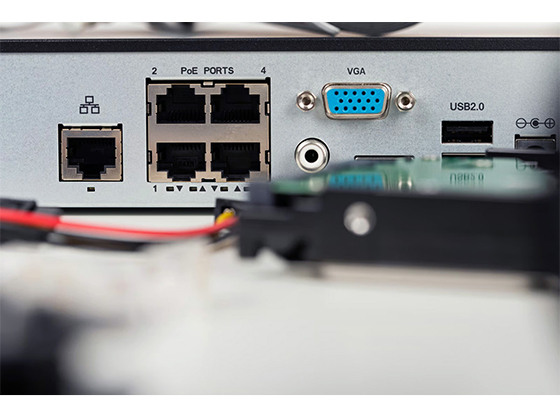
Industry 4.0 depends on the ability to connect machines, collect operational data, process information in real time, and turn factory-floor signals into business-level insights. However, most factories still operate with a mix of legacy equipment, modern controllers, industrial sensors, PLCs, SCADA systems, cloud platforms, and enterprise software that don't always speak the same language.
An industrial IoT gateway solves this problem by connecting operational technology (OT) with information technology (IT). It collects data from machines and field devices, translates industrial protocols, performs edge processing, secures communication, and sends selected data to cloud or enterprise platforms.
For manufacturers, the industrial IoT gateway is not just a connectivity device. It is a strategic foundation for production visibility, predictive maintenance, energy monitoring, process optimization, and smart factory transformation.
What is an Industrial IoT Gateway?
An industrial IoT gateway is a hardware and software device that connects machines, controllers, sensors, and industrial equipment to IT systems, cloud platforms, and data applications. It serves as the bridge between factory-floor operations and digital manufacturing systems.
Unlike a standard network router, an industrial IoT gateway is designed for manufacturing environments. It must support industrial communication protocols, operate reliably in harsh conditions, process data at the edge, and protect connected assets from cybersecurity risks.
The Universal Translator Between OT and IT
A single factory floor can include PLCs from different brands, CNC machines from different generations, sensors with different data formats, and enterprise systems that expect clean, structured data. The industrial IoT gateway reconciles all of it.
On the OT side, it connects to equipment such as PLCs, sensors, actuators, CNC machines, meters, drives, robots, and SCADA systems. On the IT side, it connects to platforms such as MES, ERP, cloud dashboards, databases, analytics software, and remote monitoring systems.
This translation layer is essential because industrial devices often use protocols such as Modbus, PROFINET, EtherNet/IP, OPC UA, CANopen, or serial communication, while IT systems typically rely on IP-based data exchange, APIs, databases, MQTT, HTTPS, or cloud services.
By converting and contextualizing data, the gateway allows manufacturers to use machine data for decisions beyond the production floor.
Why Do Manufacturers Need an IIoT Gateway?
Manufacturers need an IIoT gateway because industrial data is often trapped inside equipment. Without a gateway, valuable data may remain isolated in machines, unavailable for analysis, monitoring, or optimization.
An industrial IoT gateway helps manufacturers:
- Connect legacy machines to modern digital systems
- Collect real-time production and equipment data
- Translate industrial protocols into usable data formats
- Support remote monitoring and diagnostics
- Enable predictive maintenance
- Improve energy visibility
- Reduce cloud dependency through edge processing
- Strengthen OT cybersecurity
- Build scalable smart factory architectures
The gateway becomes especially important when manufacturers want to modernize existing production lines without replacing every machine. Instead of starting from zero, companies can connect current assets and gradually build a more data-driven factory.
Core Functions and Key Features of an Industrial IoT Gateway
An industrial IoT gateway must do more than move data from one place to another. In a real factory environment, it must translate protocols, filter and process data, secure communication, and hold up under industrial conditions.
1. Multi-Protocol Translation for Industrial Communication
Protocol translation is one of the most important functions of an industrial IoT gateway. Many production sites run mixed equipment from different vendors and different generations. Without protocol support, these machines remain disconnected from modern data platforms.
A capable gateway can support communication across protocols such as:
- Modbus TCP/RTU
- OPC UA
- PROFINET
- EtherNet/IP
- MQTT
- CANbus
- Serial communication
- Ethernet-based industrial protocols
This enables manufacturers to collect data from different machine types and standardize it for monitoring, analytics, and enterprise integration.
For Industry 4.0, protocol translation serves as the foundation for connecting fragmented equipment into a unified digital manufacturing environment.
2. Real-Time Edge Computing Capabilities
Edge computing processes data near the machine instead of routing everything to the cloud first. This is critical in industrial environments where latency, bandwidth, uptime, and data security matter.
NIST defines cloud computing as a model that enables convenient, on-demand network access to shared computing resources. However, manufacturing operations often require local responsiveness that cloud-only architectures cannot guarantee. That gap is exactly why edge computing has become central to industrial IoT deployments.
With edge computing capability, a gateway can:
- Filter unnecessary data before sending it to the cloud
- Detect abnormal machine behavior locally
- Trigger real-time alerts
- Run rule-based control logic
- Support local dashboards
- Continue operating during network interruptions
- Reduce bandwidth and cloud storage costs
For example, a vibration sensor may generate large amounts of data. Instead of uploading every raw signal, the gateway can process the data locally and send only key indicators, anomalies, or maintenance alerts.
3. Industrial-Grade Cybersecurity Protection
As factories become more connected, cybersecurity becomes a direct operational concern. Because the gateway sits between OT assets and IT systems, it serves as a critical security control point.
This lines up well with the NIST Guide to Operational Technology Security, which emphasizes that OT environments have unique performance, reliability, and safety requirements that generic IT security approaches don't fully address.
Key cybersecurity features typically include:
- Firewall protection
- VPN support
- Secure remote access
- User authentication
- Device identity management
- Data encryption
- Network segmentation
- Access control
- Security logging
- Firmware update management
For manufacturers, gateway security helps reduce the risk of unauthorized access, operational disruption, data exposure, and unsafe changes to connected systems.
4. Rugged Design for Harsh Industrial Environments
Industrial IoT gateways must operate in environments where standard commercial devices may fail. Factory floors, transportation systems, energy sites, and outdoor industrial locations can expose equipment to heat, vibration, dust, electrical noise, and unstable power conditions.
A rugged industrial gateway usually includes:
- Fanless thermal design
- Wide temperature support
- Industrial power input
- Shock and vibration resistance
- DIN-rail or wall-mount options
- Long lifecycle availability
- Industrial certifications
- Reliable connectivity options
This ruggedness matters because gateway failure can interrupt data collection, remote monitoring, and production visibility. For mission-critical industrial systems, reliability is a core requirement.
Cloud vs Edge Computing: How Should Manufacturers Choose?
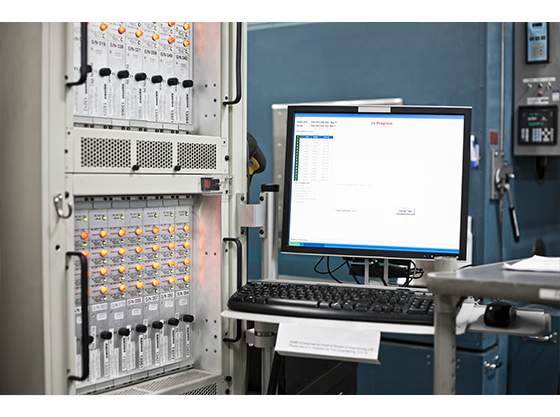
Manufacturers do not need to choose between cloud and edge computing as opposing strategies. The strongest Industry 4.0 architectures use both.
Cloud computing provides scale, centralized analytics, storage, and enterprise visibility. Edge computing provides speed, reliability, local control, and reduced dependency on external connectivity. The industrial IoT gateway is the device that makes this balance practical.
Advantages and Limitations of Cloud Computing
As defined by NIST, cloud computing provides on-demand access to shared computing resources and is valuable for applications that require large-scale data storage, cross-site visibility, advanced analytics, and centralized management, allowing manufacturers to scale digital operations without expanding on-site computing infrastructure.
Cloud platforms are well suited for:
- Long-term production data storage
- Multi-site performance dashboards
- Enterprise reporting
- AI model training
- Fleet monitoring
- Supply chain visibility
- Remote access to manufacturing insights
However, cloud computing has limitations in industrial environments. It depends on network availability, introduces latency, and may increase data-transfer and storage costs if all raw machine data is uploaded continuously.
For real-time factory decisions, cloud-only architecture usually isn't enough.
Real-Time Responsiveness and Reliability of Edge Computing
Where cloud excels at scale, edge computing excels at speed: processing data close to machines and sensors so manufacturers can respond to operational events immediately and keep running even when cloud connectivity drops. That's why it's the better fit for real-time alarms, anomaly detection, low-latency decision-making, and offline operation—the moments when waiting for a round trip to the cloud isn't an option.
The tradeoff between the two is the deciding factor for most architecture choices: cloud for depth and scale, edge for speed and resilience, which is exactly why most manufacturers end up needing both.
The Optimal Architecture: Hybrid Edge-Cloud Model
The optimal architecture for most manufacturers is a hybrid edge-cloud model.
In this model, the industrial IoT gateway processes critical data locally at the edge, while selected data is sent to the cloud for long-term analysis, centralized reporting, and enterprise-level decision-making.
A hybrid model allows manufacturers to:
- Keep time-sensitive decisions close to the machine
- Reduce bandwidth use by filtering raw data
- Send meaningful data to cloud platforms
- Maintain local operations during network interruptions
- Support centralized analytics across multiple sites
- Improve cybersecurity through layered architecture
The Industry IoT Consortium's Industrial Internet Reference Architecture provides a useful framework for understanding how industrial systems connect assets, edge systems, platforms, and business applications. In practical factory deployments, the industrial IoT gateway plays a key role in connecting these layers.
Four Key Industrial IoT Gateway Use Cases
Industrial IoT gateways create value when they turn disconnected equipment into usable operational intelligence. The following use cases show how gateways support practical Industry 4.0 transformation.
1. Legacy Equipment Connectivity
Many factories still rely on legacy machines that remain mechanically reliable but lack modern connectivity. Replacing these machines can be expensive and disruptive, which is exactly the problem an industrial IoT gateway is built to avoid.
An industrial IoT gateway allows manufacturers to connect legacy equipment without replacing the entire production line. It can collect data through serial interfaces, digital I/O, analog signals, or legacy industrial protocols, then convert that data into formats modern software platforms can use.
This approach helps manufacturers extend the value of existing assets while gradually building smart factory capability.
2. Production Monitoring and Process Optimization
Real-time production monitoring gives manufacturers better visibility into machine status, output, downtime, cycle time, and process conditions.
Here, the gateway's role is to move machine data into dashboards, MES platforms, or analytics tools. This allows teams to identify bottlenecks, compare line performance, monitor production targets, and reduce unplanned stoppages.
For example, gateway data can reveal whether a machine is running, idle, stopped, or producing below expected speed. With this visibility, manufacturers can improve scheduling, maintenance planning, and operational decision-making.
3. Condition Monitoring and Predictive Maintenance
Condition monitoring uses machine data to detect signs of equipment degradation before failure occurs. Vibration sensors, temperature sensors, current meters, and pressure sensors all feed data into the gateway. With sufficient computing resources and appropriate analytics software, the gateway can process this data locally to identify abnormal patterns and trigger alerts before equipment failure occurs.
Predictive maintenance can help manufacturers:
- Reduce unplanned downtime
- Extend equipment life
- Improve maintenance scheduling
- Lower repair costs
- Avoid secondary equipment damage
- Improve production reliability
Instead of servicing equipment only after failure, manufacturers can make maintenance decisions based on real operating conditions.
4. Smart Energy Consumption Monitoring
Energy visibility is becoming a priority for manufacturers seeking to reduce cost and improve sustainability performance. An industrial IoT gateway can collect data from power meters, sensors, compressors, HVAC systems, production machines, and utility equipment.
This allows manufacturers to monitor:
- Energy use by machine
- Peak demand periods
- Idle energy consumption
- Compressed air waste
- Equipment-level power trends
- Energy consumption per production unit
Smart energy monitoring helps teams identify where energy is being wasted and where improvements can produce measurable savings. It also supports ESG reporting and carbon-reduction initiatives through higher-quality, more granular operational data.
Enabling Smart Factory Transformation with NEXCOM Industrial IoT Gateway Solutions
Smart factory transformation starts with connectivity across machines, edge systems, cloud services, and enterprise applications. NEXCOM's industrial IoT gateway solutions help manufacturers connect field control and sensor nodes with higher-level systems, enabling existing equipment to participate in modern data-driven operations without requiring wholesale replacement.
Whether you're pursuing predictive maintenance, energy visibility, or a more connected production line, the starting point is the same: connecting the assets you already have. To accelerate your Industry 4.0 transformation, contact NEXCOM and discuss the right gateway approach for your operation.
- Related Links:
- What Is an Industrial Robot Controller? A Complete Guide
- EtherCAT vs. EtherNet/IP: A Complete Comparison for High-Speed Motion Control
- Browse Other News:
- What Is an Industrial Robot Controller? A Complete Guide
- What is an Industrial IoT Gateway? The Ultimate Guide for Industry 4.0
- All Blog News
