
Understanding the Different Types of Ethernet Switches for Modern Networks
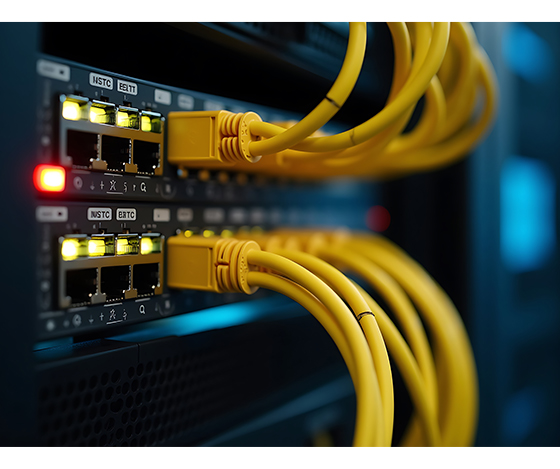
Ethernet switches are the foundation of modern networking. From office IT environments to industrial automation systems, switches connect devices, control traffic flow, and help ensure that data reaches the right destination efficiently.
However, not all Ethernet switches are designed for the same purpose. The right choice depends on management requirements, network scale, port speed, security needs, environmental conditions, and whether the switch will be used in IT, OT, or industrial networking environments.
For manufacturers, system integrators, and automation teams, understanding the types of Ethernet switches is essential for building reliable, secure, and scalable networks. This guide explains the major switch categories and highlights why Layer 3 industrial switches are increasingly important for mission-critical automation and OT security.
What is an Ethernet Switch?
An Ethernet switch is a networking device that connects computers, controllers, servers, cameras, sensors, HMIs, PLCs, robots, and other networked equipment within a local area network.
Unlike a simple hub, which sends data to every connected device, an Ethernet switch forwards data only to the intended destination. It does this by learning the MAC addresses of connected devices and using that information to direct traffic efficiently. A well-designed switching infrastructure can improve network stability, reduce congestion, strengthen security, and support real-time communication.
Common Ethernet switch applications include:
- Factory automation networks
- Warehouse automation systems
- Machine vision and inspection systems
- Robotics and AMR/AGV communication
- Industrial IoT deployments
- OT cybersecurity architecture
- Edge computing and data collection
- Enterprise LAN infrastructure
Types of Ethernet Switches by Management Level
One of the most common ways to classify Ethernet switches is by management level. This determines how much control administrators have over configuration, monitoring, traffic prioritization, and security.
Unmanaged Switches
Unmanaged switches are simple plug-and-play devices. They do not require configuration and are often used in small networks where basic connectivity is enough.
Advantages of unmanaged switches include:
- Easy installation
- Lower cost
- Minimal setup time
- Suitable for simple device connections
However, unmanaged switches provide limited visibility and control. They usually do not support advanced features such as VLANs, traffic monitoring, Quality of Service, or network segmentation. For industrial automation, unmanaged switches may be suitable for small, non-critical connections, but they are usually not ideal for mission-critical OT networks.
Smart / Lightly Managed Switches
Smart switches, also known as lightly managed switches, strike a balance by providing more control than unmanaged options without the complex configuration of fully managed models.
They may support features such as:
- Basic VLAN configuration
- Port monitoring
- Link aggregation
- Basic QoS
- Web-based management
- Simple security settings
Smart switches can be useful for small to mid-sized networks that need some segmentation and traffic control but do not require full enterprise-grade management.
Fully Managed Switches
For enterprise and industrial environments demanding absolute reliability, fully managed switches provide the highest level of configuration, visibility, and control. They are commonly used in enterprise networks, data centers, and industrial automation environments where reliability, security, and performance are critical.
Fully managed switches may support:
- VLANs
- Advanced QoS
- Layer 3 routing
- Access control lists
- Network monitoring
- Redundancy protocols
- SNMP management
- Port mirroring
- Security policy enforcement
For industrial networking and OT security, fully managed switches are often the preferred choice because they allow network engineers to segment traffic, monitor devices, prioritize critical data, and control communication between production systems.
Types of Ethernet Switches by Configuration
Ethernet switches can also be classified by their physical design and deployment model. Choosing the right configuration is important for installation flexibility, scalability, and maintenance.
Fixed-Configuration Switches
Fixed-configuration switches come with a set number of ports and features. The hardware configuration is not designed for major expansion. They are commonly used when network requirements are clearly defined, such as:
- Small factory cells
- Edge equipment cabinets
- Machine-level networking
- Office LANs
- Remote monitoring stations
Fixed-configuration switches are often cost-effective and easy to deploy. However, if future expansion is expected, teams should carefully evaluate port count, speed, uplink capacity, and redundancy needs before selection.
Modular Switches
Modular switches feature typically hot-swappable modules, such as interface cards or power supplies, allowing network engineers to scale operations on demand. This makes them suitable for larger networks where scalability and flexibility are important.
Modular switches may be used in:
- Core network environments
- Large manufacturing sites
- Campus networks
- Data centers
- Large-scale industrial facilities
The main advantage of modular switches is expandability. However, they may require higher investment, more space, and more technical expertise to manage.
Stackable vs. Standalone Switches
Standalone switches operate independently. They are simple to deploy and suitable for smaller networks or isolated applications.
Stackable switches allow multiple switches to operate as a single logical unit. This can simplify management and increase scalability. In environments where multiple switches are needed across a facility, stacking can help reduce administrative complexity.
For industrial automation, the choice between stackable and standalone switches depends on network architecture, redundancy requirements, and maintenance strategy.
Types of Ethernet Switches by Network Layer
Another important classification is based on the OSI network layer at which the switch operates. For modern industrial networks, this distinction is especially important because it affects traffic control, segmentation, and routing.
Layer 2 Switches
Layer 2 switches operate mainly at the data link layer. They forward traffic based on MAC addresses and are commonly used for local network switching.
Layer 2 switches are suitable for:
- Basic LAN connectivity
- Device-level communication
- Local machine networks
- Small automation cells
- VLAN-based segmentation
In many networks, Layer 2 switches are sufficient for connecting devices within the same local network segment. However, they do not provide the same routing capabilities as Layer 3 switches.
Layer 3 Switches (Multilayer Switches)
Layer 3 switches, also known as multilayer switches, combine traditional switching with routing capabilities. They can forward traffic based on both MAC addresses and IP addresses, making them useful for networks that require communication between different VLANs or subnets.
For industrial automation and OT security, Layer 3 switches are especially valuable because they help separate and control traffic across different production zones.
Layer 3 switches can support:
- Inter-VLAN routing
- Network segmentation
- Access control policies
- Reduced broadcast traffic
- Better traffic isolation
- Improved scalability
- Faster routing within local networks
In an industrial environment, different systems may need to be separated into zones, such as production machines, PLCs, HMIs, vision systems, robots, engineering workstations, and enterprise IT systems. A Layer 3 switch can help manage communication between these zones while supporting security policies that reduce unnecessary exposure.
This is why Layer 3 switches are often preferred for industrial networking, especially when OT security, network resilience, and scalable architecture are priorities.
Exploring Ethernet Switch Port Types and Speeds
Port type and speed are also critical when comparing different types of Ethernet switches. The right port configuration depends on bandwidth requirements, cable type, device compatibility, and power needs.
Data Rates: Fast Ethernet, Gigabit, and Multi-Gigabit
Ethernet switches may support different data rates, including:
- Fast Ethernet: 100 Mbps
- Gigabit Ethernet: 1 Gbps
- Multi-Gigabit Ethernet: 2.5 Gbps, 5 Gbps, 10 Gbps, and beyond
- High-speed uplinks using fiber or SFP/SFP+ interfaces
In office networks, Gigabit Ethernet is typically sufficient for general connectivity. In industrial automation, however, bandwidth requirements depend heavily on the application. Machine vision, AI inspection, edge computing, and real-time data collection often demand higher-speed uplinks or dedicated network segments.
For example, machine vision systems transmit large volumes of image data, while PLC networks depend on stable, low-latency communication. Selecting the appropriate port speed prevents network bottlenecks and helps ensure consistent, predictable performance.
Power over Ethernet (PoE) Switches
Power over Ethernet, or PoE, eliminates the need for redundant electrical wiring by delivering both power and data through a single Ethernet cable. PoE switches are commonly used for:
- IP cameras
- Wireless access points
- Sensors
- Access control devices
- Industrial IoT devices
- Edge monitoring equipment
In industrial settings, PoE can be useful when devices are installed in areas where separate power wiring is difficult or costly. However, teams should check the total PoE power budget, device requirements, cable length, and environmental conditions before deployment.
Key Features to Consider When Choosing an Ethernet Switch
When choosing among the different types of Ethernet switches, hardware specifications are only part of the decision. Network features are equally important, especially for industrial automation and OT environments.
VLANs and Network Security
VLANs, or Virtual Local Area Networks, allow network administrators to logically separate and secure traffic across a single physical network infrastructure. This is one of the most important features for both enterprise and industrial networks.
In OT environments, VLANs can help separate:
- PLC networks
- Robot systems
- Machine vision devices
- Engineering workstations
- HMI and SCADA systems
- IP cameras
- Enterprise IT traffic
- Remote maintenance connections
This segmentation helps reduce unnecessary communication, limit broadcast traffic, and support better security control.
For stronger OT security, VLANs should be combined with access control policies, firewall rules, secure remote access, and continuous monitoring. This is especially important as factories connect more machines, sensors, robots, and edge devices.
Quality of Service (QoS)
Quality of Service, or QoS, allows switches to prioritize certain types of traffic. This is useful when multiple applications share the same network but have different performance requirements. For example:
- Mission-critical control data requires deterministic, ultra-low latency to maintain operational precision.
- Machine vision video streams demand consistent, high-bandwidth throughput without interruption.
- Safety monitoring systems mandate absolute, top-priority handling to ensure immediate fail-safes.
- General IT file transfers tolerate standard, best-effort delivery without impacting real-time automation processes.
In industrial automation, QoS helps ensure that critical traffic is not delayed by less important data. This is especially valuable in environments with robotics, machine vision, production monitoring, and real-time control applications.
How to Choose the Right Ethernet Switch for Industrial Automation
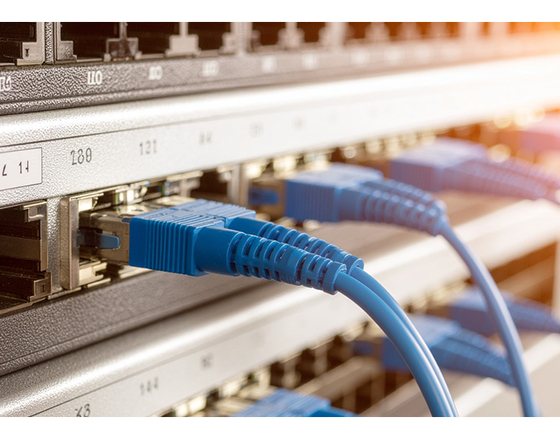
Industrial automation networks have different requirements from standard office networks. They must support uptime, reliability, deterministic communication, cybersecurity, environmental durability, and long lifecycle operation.
Choose Industrial-Grade Switches for Mission-Critical Reliability
Purpose-built for demanding operating environments, industrial-grade switches abandon the fragility of commercial hardware. They deliver ruggedized mechanical designs, extreme temperature tolerances, redundant power inputs, standard DIN-rail mounting, and high vibration resistance to ensure continuous operation. These ruggedized switches support mission-critical applications across:
- Factory and smart warehouse automation
- Robotics and precision motion control
- Energy, utilities, and critical transportation systems
- Harsh and remote industrial edge sites
In these environments, downtime can directly affect production output, worker safety, and operational continuity.
Prioritize OT Security and Layer 3 Switching
For modern industrial networking, Layer 3 switches are often the better choice when security and scalability are priorities.
A Layer 3 switch can help industrial teams:
- Segment production lines into zones
- Control traffic between VLANs
- Reduce broadcast domain size
- Support routing between OT systems
- Improve visibility and manageability
- Strengthen security architecture
This is especially important for OT environments where IT and OT networks are increasingly connected. As NIST SP 800-82 highlights, OT systems have unique performance, reliability, and safety requirements. Therefore, switch selection should support not only data forwarding, but also secure and reliable industrial operation.
Build Future-Ready Industrial Networks with NEXCOM
Building a future-ready industrial network requires more than basic connectivity. It requires secure, reliable, and scalable infrastructure that can support real-time automation, OT security, and industrial edge applications.
To meet these rigorous demands, NEXCOM provides industrial networking and OT security solutions designed for demanding automation environments. For businesses evaluating the right types of Ethernet switches for industrial applications, NEXCOM's ISA 142 offers a strong foundation for OT network security and high-density switching.
The NEXCOM ISA 142 is a fanless, high-density security gateway and TSN switch for OT network security. It is designed with an Intel Atom processor and supports up to 16 switch ports, making it suitable for industrial deployments that require rugged design, connectivity, and security-focused networking.
NEXCOM ISA 142 can support industrial network applications such as:
- OT security architecture
- Industrial network segmentation
- Factory automation networks
- Smart warehouse automation
- Production logistics
- Edge connectivity
- Machine and controller communication
- Secure industrial switching
For manufacturers and system integrators, NEXCOM helps bridge the gap between connectivity and industrial security. By combining industrial-grade hardware with OT-focused networking capabilities, NEXCOM enables businesses to build networks that are ready for automation, cybersecurity, and long-term scalability.
Contact NEXCOM today to learn more about NEXCOM ISA 142 and discuss the right solution for your industrial networking needs.
- Related Links:
- Hybrid Video Surveillance Architecture: What Stays Local and What Moves to the Cloud
- What Is an Industrial Robot Controller? A Complete Guide
- Browse Other News:
- Hybrid Video Surveillance Architecture: What Stays Local and What Moves to the Cloud
- What is an Industrial IoT Gateway? The Ultimate Guide for Industry 4.0
- All Blog News
