
EtherCAT Protocol Explained: Architecture, Working Principles, and Key Benefits
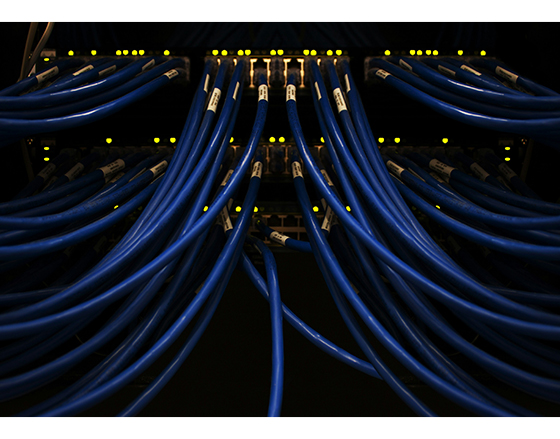
Modern production machines rely on fast, synchronized communication between controllers, servo drives, I/O modules, sensors, vision systems, and safety devices. When motion must be coordinated precisely, conventional networking approaches may not provide the deterministic timing and low jitter required for reliable industrial control.
EtherCAT was developed to address this challenge. Built on standard Ethernet physical layers, EtherCAT is an industrial Ethernet technology designed for high-performance automation, real-time communication, and synchronized motion control.
From CNC machines and packaging systems to robotic cells and semiconductor equipment, EtherCAT helps machine builders create more responsive, scalable, and efficient automation architectures. This guide explains how EtherCAT works, its key technical benefits, how it compares with other industrial communication protocols, and how NEXCOM Robotic Solutions (NexCOBOT Co. Ltd.) supports EtherCAT-based production machine development.
What is EtherCAT Protocol?
A Core Communication Standard for Industrial Automation
EtherCAT, short for Ethernet for Control Automation Technology, is an open-standard industrial Ethernet protocol designed for deterministic communication between a central controller and distributed field devices.
In a typical EtherCAT network, one EtherCAT Master communicates with multiple EtherCAT slave devices. These slave devices may include servo drives, remote I/O modules, encoders, motion controllers, sensors, safety devices, and other automation components.
Unlike standard Ethernet, where each device receives and processes individual packets separately, EtherCAT uses a processing-on-the-fly approach. The EtherCAT Master sends one or more Ethernet frames through the network; each slave device reads its assigned input data and inserts output data as the frame passes through in real time.
This architecture helps minimize communication overhead and supports highly efficient data exchange across a machine network.
The EtherCAT Technology Group's technology overview explains that EtherCAT also supports network topology detection, diagnostics, and Safety over EtherCAT (FSoE) — functions critical to industrial automation systems.
Why Traditional Ethernet Cannot Meet Real-Time Control Requirements
Traditional Ethernet is widely used for IT networking, data transfer, and general device connectivity. However, conventional Ethernet networks are not inherently designed to guarantee deterministic response times for tightly synchronized motion control.
In a standard network, traffic can be affected by factors such as:
- Network congestion
- Variable transmission delays
- Switch processing time
- Packet prioritization conflicts
- Non-deterministic communication cycles
- Unpredictable latency and jitter
For office applications, these variations are usually acceptable. For production machines running synchronized motion control, they can create serious problems.
For example, a multi-axis machine may need several servo drives to execute motion commands at nearly the same moment. If communication timing is inconsistent, machines can suffer reduced precision, lower throughput, and unstable motion, directly impacting yield and uptime.
The EtherCAT protocol addresses this challenge by supporting deterministic cyclic communication, distributed clock synchronization, and efficient processing of control data. This makes it well-suited to applications where timing precision is essential.
Why Choose EtherCAT Protocol? Key Technical Advantages
Precise Time Synchronization with Distributed Clocks
One of EtherCAT's most important features is Distributed Clocks (DC). It synchronizes timing across EtherCAT devices so that motion, I/O actions, and control tasks can occur in a coordinated manner. Rather than relying only on the central controller's timing, each EtherCAT slave device maintains synchronized local clocks across the network. This is especially valuable for high-performance applications such as:
- Multi-axis motion control
- Robotic systems
- CNC machines
- Semiconductor equipment
- Packaging machinery
- Printing systems
- High-speed assembly lines
With synchronized timing, multiple axes can move together more precisely, helping production machines maintain repeatability and control quality.
Flexible Network Topology Without Switches
EtherCAT supports flexible network topologies, including line, tree, star, ring, and drop-line configurations. In many cases, EtherCAT devices can be connected directly in sequence without requiring conventional Ethernet switches between every node.
This simplifies machine wiring and reduces system complexity. For machine builders, this flexibility can support cleaner designs for:
- Modular production machines
- Robotic work cells
- Distributed I/O systems
- Conveyor systems
- Packaging lines
- Multi-station assembly equipment
Because EtherCAT supports automatic topology detection, the system compares the actual network configuration against the expected design during startup. This allows engineers to identify wiring issues, missing devices, or unexpected configuration changes.
Advanced Diagnostics and Fault Detection
Diagnostics are critical in industrial automation because machine downtime can directly affect productivity, delivery schedules, and maintenance costs.
The EtherCAT protocol provides diagnostic capabilities that help users identify communication problems, detect topology changes, and monitor device states. Engineers can use these capabilities to troubleshoot issues such as disconnected nodes, communication errors, configuration mismatches, and device faults.
For production machine builders, improved diagnostics can support:
- Faster commissioning
- Reduced troubleshooting time
- Easier maintenance
- More predictable machine uptime
- Better lifecycle support for customers
EtherCAT diagnostics are particularly useful in complex systems with many distributed devices, including servo drives, remote I/O, safety modules, and machine vision components.
Cost Efficiency and Open Ecosystem
EtherCAT uses Ethernet-based physical layers and supports a broad ecosystem of compatible industrial devices. This gives machine builders flexibility when selecting controllers, drives, I/O modules, encoders, and other automation components.
The protocol also supports high node density and efficient cyclic communication, helping manufacturers build scalable systems without excessive network complexity.
For machine builders, the benefits may include:
- Reduced wiring complexity
- Efficient use of communication bandwidth
- Interoperability with third-party EtherCAT devices
- Easier scalability for modular machine designs
- Faster development using established device profiles and configuration tools
EtherCAT is also supported by a large industrial automation ecosystem, giving developers more freedom to select components that match their performance and integration requirements.
EtherCAT Compared with Other Industrial Communication Protocols
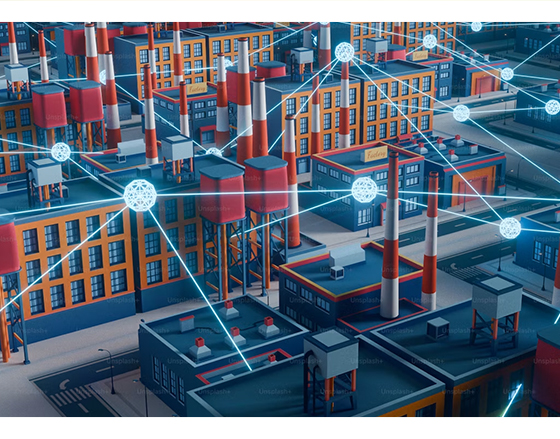
Choosing an industrial communication protocol depends on the application's timing requirements, installed device ecosystem, engineering tools, safety needs, and long-term support strategy. EtherCAT is not automatically the right choice for every project, but it is particularly strong in high-performance motion and synchronized machine control.
EtherCAT vs. PROFINET
EtherCAT and PROFINET are both widely used industrial Ethernet technologies, but they are optimized for different priorities.
EtherCAT is designed around a master-and-slave architecture with efficient processing-on-the-fly communication. It is commonly used for applications requiring tightly synchronized motion control and deterministic cyclic communication.
PROFINET takes a tiered approach to performance, offering standard communication, Real-Time, and Isochronous Real-Time (IRT) modes — with PROFINET IRT targeting applications that require precise, deterministic transmission comparable to EtherCAT's capabilities.
In practice, EtherCAT tends to be the preferred choice for high-performance motion control and compact machine architectures, while PROFINET is often favored when deep integration with Siemens-based automation ecosystems is a priority.
Neither is universally superior. The right decision depends on motion requirements, controller compatibility, installed infrastructure, and the engineering tools your team already works with.
EtherCAT vs. CANopen (Including CoE)
CANopen is a fieldbus-based communication system built on CAN technology. It has been widely used in embedded control, drives, vehicles, and distributed automation.
EtherCAT and CANopen differ in their underlying communication technology. EtherCAT uses Ethernet-based communication, while CANopen is traditionally based on CAN bus communication.
However, EtherCAT supports CoE, or CAN application protocol over EtherCAT. CoE allows EtherCAT systems to use CANopen communication mechanisms, including CANopen object dictionaries and device profiles, while benefiting from EtherCAT's high-speed Ethernet-based architecture.
This means that CoE can help machine builders reuse familiar CANopen concepts in an EtherCAT environment.
The EtherCAT Implementation Guide identifies CoE as one of EtherCAT's mailbox communication protocols and explains its role in acyclic data exchange.
EtherCAT vs. EtherNet/IP
EtherNet/IP is an industrial Ethernet network that uses the Common Industrial Protocol, or CIP. It is widely deployed in industrial automation, especially in environments that rely on Rockwell Automation-compatible systems and CIP-based device ecosystems.
EtherNet/IP is commonly used for general industrial communication, distributed I/O, programmable controllers, safety functions, and connected factory systems.
EtherCAT is often preferred for applications where synchronized multi-axis motion, low communication jitter, and highly deterministic cycle behavior are central requirements.
When comparing the two, machine builders should consider:
- Existing controller and device ecosystem
- Motion control performance requirements
- System topology
- Engineering software
- Safety architecture
- Customer standards and preferred suppliers
EtherCAT vs. Powerlink
Ethernet POWERLINK (EPL) is another real-time protocol designed for industrial machine environments. It uses a managed communication approach to support deterministic data exchange and is often used in motion control and automation applications.
The key architectural difference lies in how each protocol achieves synchronization. EtherCAT's processing-on-the-fly mechanism and Distributed Clocks are designed to minimize cycle time and maximize synchronization precision across large device networks. POWERLINK achieves determinism through controlled network timing managed by a central cycle manager.
Both technologies can support real-time industrial automation. The best choice depends on device ecosystem availability, controller requirements, engineering resources, and the automation vendor your team or your customers are already aligned with.
EtherCAT Implementation Basics
Understanding ESI and ENI Configuration Files
EtherCAT implementation involves more than connecting devices physically. Each EtherCAT system requires configuration information that defines how the Master communicates with connected slave devices.
An ESI file, or EtherCAT Slave Information file, describes the capabilities and communication parameters of an EtherCAT slave device. It may include information about supported process data, mailbox protocols, device identity, initialization behavior, and configuration options.
An ENI file, or EtherCAT Network Information file, describes the configured EtherCAT network. It is typically generated by an EtherCAT configuration tool after the system integrator selects devices, arranges the topology, maps process data, and defines network settings.
In simple terms:
- ESI files describe individual EtherCAT slave devices.
- ENI files describe the complete configured EtherCAT network.
These files help simplify configuration, commissioning, maintenance, and future modifications.
Supported Mailbox Protocols: CoE, EoE, FoE
In addition to cyclic process data communication, EtherCAT supports mailbox communication for acyclic data exchange.
Common EtherCAT mailbox protocols include:
- CoE — CAN application protocol over EtherCAT: Supports CANopen-based communication mechanisms, object dictionaries, and device profiles.
- EoE — Ethernet over EtherCAT: Allows Ethernet frames to be transmitted through an EtherCAT network.
- FoE — File access over EtherCAT: Supports file transfer functions, such as firmware updates or device file downloads.
These mailbox protocols give the EtherCAT protocol more flexibility beyond cyclic motion and I/O data exchange. They can support configuration, diagnostics, device management, and engineering workflows.
FSoE
FSoE stands for Fail Safe over EtherCAT, the protocol's integrated approach to transmitting safety-critical data over the same network used for standard control, such as:
- Emergency stop
- Safety gate monitoring
- Safe torque off
- Safety-rated stop functions
- Safety I/O communication
- Protective device monitoring
Using FSoE alone does not make a machine safe. The complete safety function still requires proper risk assessment, safety architecture, validation, and compliance with applicable functional safety standards, such as IEC 62061 or ISO 13849.
For production machine builders, FSoE can help reduce cabling complexity by integrating standard control and safety communication into one coordinated network architecture.
Building High-Performance Automation Systems with NEXCOM Robotic Solutions
A fast communication protocol is only one piece of the puzzle. High-performance production machines also demand reliable computing platforms, real-time operating environments, flexible I/O, and motion control software that work together without friction. Getting all of that right — and getting to market faster — is where NEXCOM makes the difference.
NEXCOM Robotic Solutions' EtherCAT Motion Control platform is designed to support machine builders developing advanced automation systems. The ECM Series EtherCAT Master Controllers combine PC-based control with EtherCAT Master capabilities to help accelerate development for production machine applications.
Integrated with the NexECM EtherCAT Master software stack, the ECM Series supports real-time EtherCAT communication for machine automation. The stack is designed to help machine builders coordinate third-party EtherCAT slave devices, including servo drives, I/O modules, and motion components.
Key capabilities include:
- EtherCAT Master architecture for machine automation
- Support for up to 64 EtherCAT slave devices
- EtherCAT communication cycle times of no more than 250 μs
- CiA 402 motion profile support
- Distributed Clock support
- ESI and ENI configuration support
- CoE and FoE communication support
- NexECM Studio configuration tools
- Real-time operating system support through NexRTOS
Together, these capabilities eliminate much of the complexity involved in designing, configuring, and scaling an EtherCAT-based control system, so engineering teams can spend less time on integration and more time building machines that perform.
From robotics and CNC to packaging, inspection, assembly, and high-speed motion, NEXCOM Robotic Solutions delivers the computing and control foundation that production machine builders need to compete on precision, throughput, and reliability.
Contact NEXCOM today to discuss the right EtherCAT control solution for your production machine application.
- Related Links:
- Hybrid Video Surveillance Architecture: What Stays Local and What Moves to the Cloud
- What Is an Industrial Robot Controller? A Complete Guide
- Browse Other News:
- Hybrid Video Surveillance Architecture: What Stays Local and What Moves to the Cloud
- What is an Industrial IoT Gateway? The Ultimate Guide for Industry 4.0
- All Blog News
