
|
|
[NOW OPEN] Make Future City into Reality: NEXCOM Future City Virtual Expo
NEXCOM Future City Virtual Expo is Now Open! Start...
[NOW OPEN] Make Future City into Reality: NEXCOM Future City Virtual Expo

|
What Is Edge Computing? Edge Computing in IoT for Manufacturing
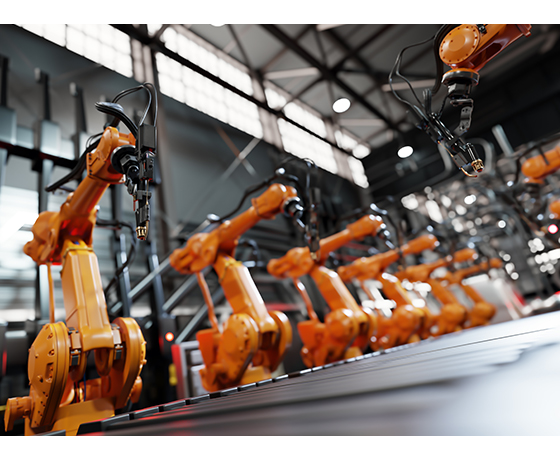
Factories generate data continuously. Cameras capture production images, sensors measure temperature and vibration, robots report operating conditions, and facility systems track energy use, air quality, and other environmental variables. Sending every piece of this data to a remote cloud before deciding what to do can add network delay, consume bandwidth, and make local operations more dependent on external connectivity.
Edge computing places processing resources near connected equipment, letting manufacturers choose which tasks run locally and which use central systems. In an IoT-enabled factory, that choice shapes how machine data supports monitoring, maintenance, and quality inspection. Understanding these roles is the starting point for deciding where edge computing adds value.
What Is Edge Computing?
Edge computing processes selected data and runs applications close to where it's generated, reducing the need to send every workload to a distant data center.
The NIST Fog Computing Conceptual Model examines related decentralized computing architectures designed to address the scale and latency challenges of cloud-centric IoT systems.
Edge and cloud computing often work together. Edge systems handle workloads that benefit from local processing, filtering, or immediate action, while cloud platforms support centralized storage, cross-site analytics, AI model training, and broader system management.
How Does Edge Computing Work in IoT?
The Internet of Things (IoT) connects physical devices such as sensors, machines, cameras, meters, and controllers so they can collect and exchange data. Edge computing adds local processing capabilities to this architecture, allowing selected information to be analyzed and acted upon near its source.
In a manufacturing environment, sensors and controllers generate equipment data that an industrial gateway or edge computer can collect and process. Local applications may filter measurements, detect abnormal conditions, or trigger alerts, while selected results are forwarded to centralized systems for reporting, historical analysis, or coordination across sites.
This architecture is commonly used in the Industrial Internet of Things (IIoT), where connected manufacturing equipment and factory infrastructure support monitoring, analytics, and automation.
Why Businesses Need Edge Computing in IoT: Four Key Benefits
Reduced Latency for Faster Local Decisions
Latency is the delay between an event occurring and a system responding to it. If every decision depends on sending data to a remote cloud service and waiting for a response, network transmission becomes part of that delay.
Edge computing shortens this path by processing time-sensitive data closer to the machine or device. This is particularly useful for AI inference, which means using a trained AI model to analyze new data. A production-line vision system, for example, can identify a potential defect locally without first sending every image to a remote server.
Lower Bandwidth Usage and Reduced Data Transmission Costs
Factories can generate large volumes of raw data from cameras, sensors, machines, and connected equipment. Much of that information may be useful locally without needing to be transmitted or retained in full.
Edge systems can filter, aggregate, compress, or analyze data before sending it upstream. A vision system might transmit defect images and inspection results instead of a continuous video stream, while equipment-monitoring software can forward alerts or summarized condition data rather than every sensor measurement.
By sending only the data that needs centralized processing or storage, manufacturers can reduce bandwidth use and the amount of data handled by cloud services. For AI services that charge by input tokens, locally filtering or summarizing text records can reduce the number of tokens submitted. The savings depend on the service's pricing and the information the application needs to retain.
Enhanced Security and Data Privacy Protection
Edge computing gives manufacturers more control over where sensitive data and AI models are used. Protecting these assets requires device authentication, access controls, software updates, and secure storage and communications. Within that security framework, local processing helps teams limit which information is shared outside the factory.
Production parameters, process know-how, equipment settings, energy-management records, and other operational data can be processed on-site, with selected results forwarded to central systems. Locally hosted AI models also need controlled access to model files and update functions to reduce the risk of unauthorized copying or modification. These controls protect both the information used by an application and the model that interprets it.
Where factory cameras capture identifiable workers, privacy protection also involves limiting who can view footage and how long it is retained. Processing images locally allows teams to share inspection results while restricting access to the original footage. This gives manufacturers a practical way to use production data while controlling access to sensitive records, images, and models.
Higher Reliability and Offline Operation Capability
Some industrial applications must continue operating even when connectivity to a cloud service or external network is interrupted. By keeping the required software, computing resources, and data available locally, edge systems can continue selected functions such as equipment monitoring, local alarms, or image analysis without continuous cloud access.
This capability depends on the complete system design, including local network availability, application dependencies, and access to required data or services. Tasks that depend on centralized infrastructure can resume when connectivity is restored.
Key Edge Computing Applications in Manufacturing
Facility Monitoring and Industrial Automation
A facility monitoring and control system (FMCS) can integrate factory subsystems such as energy management systems (EMS), HVAC, water supply and drainage, compressed air, lighting, and access control into a shared operational view. With compatible interfaces, an edge computing platform can collect system status, normalize information from different protocols, and support factory-wide monitoring, alarms, schedules, and supervisory control.
This integration helps operators understand how facility systems affect one another and production operations. For example, an FMCS can coordinate HVAC and utility use with production schedules, connect access-control events with facility alerts, and provide a central interface for responding to infrastructure issues across the site. Local processing also allows selected monitoring and supervisory functions to continue when cloud connectivity is limited.
Time-critical and safety-related functions still remain with controllers designed for those requirements. The edge layer supports cross-system integration, visualization, supervisory coordination, and data exchange with central platforms, creating a clearer division between local control and factory-wide management.
Predictive Maintenance for Equipment Health Monitoring
Predictive maintenance uses equipment-condition data to identify deterioration before it develops into an unexpected failure. Industrial robots, autonomous mobile robots (AMRs), forklifts, motors, pumps, and other critical assets can generate data such as vibration, temperature, current, pressure, and operating cycles.
Edge computing enables this data to be analyzed near the equipment. Local analytics can identify abnormal conditions, while predictive models can use historical and current operating data to estimate deterioration or future maintenance needs.
The NIST Asset Condition Management framework identifies condition awareness, diagnostics, and estimates of future equipment health as capabilities that support predictive maintenance. For manufacturers, the goal is to turn equipment data into maintenance information early enough to plan intervention and reduce the risk of unplanned downtime.
Defect Detection and Quality Inspection with Edge AI
Manufacturing inspection is a natural application for edge computing because industrial cameras can generate large amounts of image data while inspection results may be needed immediately.
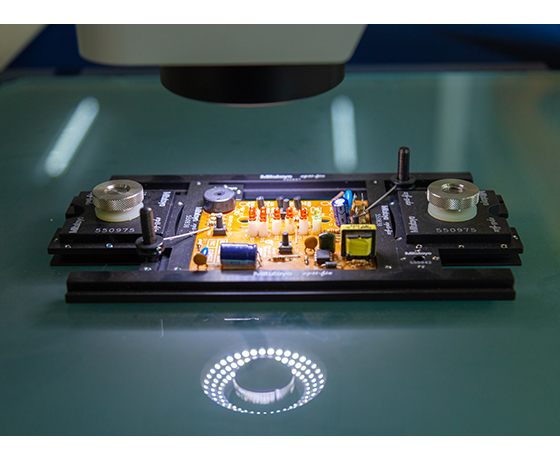
A machine vision system uses cameras and image-processing software to inspect products or production processes. With local AI inference, it can identify visual abnormalities and associate each result with the inspected item. The result can then prompt operator review or pass to a machine controller for a defined sorting or rejection action.
For automated handling, the inspection result must reach the controller before the relevant decision point, with a defined response to missing or uncertain results. Selected images and records can also be retained for traceability and model improvement. This connects inspection at production speed with the evidence needed to investigate defects and improve quality over time.
Evolving Trends in Edge Computing for IoT
From Edge AI to Physical AI and Autonomous Systems
Edge AI is extending beyond data analysis into physical AI and embodied intelligence, where machines use information from their surroundings to guide physical actions.
Humanoid robots, quadruped robots, autonomous vehicles, and industrial robots may combine local AI inference with sensor fusion, motion planning, and control systems to perceive their environment and respond to changing conditions.
These applications depend on coordination between perception, computing, control, and actuation. At COMPUTEX 2026, NEXCOM Group demonstrated this approach through a dual-arm robotic system combining AI vision-based trajectory planning with real-time motion control for precision assembly.
The Synergy Between Edge Computing and 5G Connectivity
In factories, 5G is particularly relevant for mobile or distributed equipment that cannot rely entirely on fixed network connections. Autonomous mobile robots (AMRs), connected vehicles, portable inspection systems, and other moving assets can use wireless connectivity to exchange data with nearby edge systems while operating across the factory floor.
The ETSI Multi-access Edge Computing (MEC) framework describes how computing capabilities can be deployed closer to connected devices across different access networks, including cellular, fixed, and WLAN environments. In a 5G-enabled factory, wireless connectivity and nearby edge computing can work together to support local analytics, AI inference, and communication between mobile equipment and factory systems.
Hybrid Edge-Cloud Architectures for Multi-Site Operations
As edge computing expands across production lines and factories, organizations need to coordinate distributed systems while preserving the ability to process critical workloads locally.
A hybrid edge-cloud architecture can keep time-sensitive applications near machines while using centralized infrastructure for long-term storage, cross-site analytics, AI model training, and broader system management.
Centralized platforms can also help distribute software and AI model updates, monitor system status, and maintain consistent configurations across multiple locations. Applications that must continue during connectivity interruptions should retain the necessary computing resources, data, and dependencies locally.
This architecture allows manufacturers to manage edge systems across multiple sites while maintaining local processing capabilities where operational requirements demand them.
How NEXCOM Enables Edge Computing for Smart Manufacturing
Matching Industrial Edge Hardware to Manufacturing Workloads
Industrial edge computing requires hardware that can process local workloads while connecting existing equipment, sensors, and factory networks. Computing performance, industrial I/O, connectivity, expansion, and environmental tolerance all influence how an edge system can be deployed.
NEXCOM Industry AIoT (NexAIoT Co., Ltd.) provides industrial computing platforms such as the NISE 3910E16/E2/P2/P2E, a fanless system supporting 12th-, 13th-, and 14th-generation Intel® Core™ processors and up to 64 GB of DDR5 memory. Its four 2.5GbE ports support connectivity between industrial networks and connected devices, while isolated serial interfaces enable integration with existing equipment. Optional LTE/5G connectivity and model-dependent PCIe expansion provide flexibility for different deployment requirements.
Designed for industrial environments, the platform supports a 12–30 V DC input and an operating temperature range of -20°C to 60°C under the specified airflow conditions. These capabilities make it a configurable computing foundation for applications such as factory monitoring, equipment analytics, industrial IoT connectivity, and compatible Edge AI workloads.
Accelerate your smart manufacturing strategy with NEXCOM. Contact us to discuss the edge computing platform and architecture that best fit your application.
- Related Links:
- Edge Computing Security Challenges: Risks, Threats, and Best Practices
- Before the Numbers Could Talk: Verifying Energy Savings at a Water Treatment Plant
- Browse Other News:
- Edge Computing Security Challenges: Risks, Threats, and Best Practices
- What Is Edge Computing? Edge Computing in IoT for Manufacturing
- All Blog News
