
Warehouse Robotics Trend: AI, RaaS, and the Future of Automation
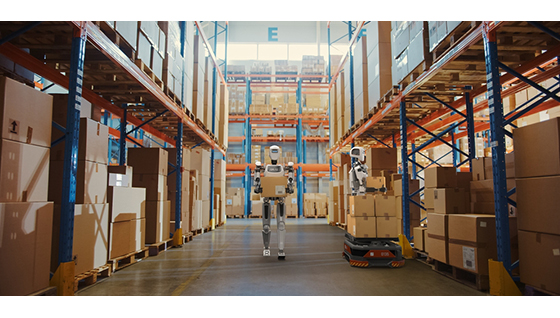
Modern warehouse operations are transitioning from rigid, hardware-dependent facilities to agile, software-defined ecosystems. This shift is driven by a critical need for sub-millisecond response times and horizontal system interoperability. As supply chains become more complex and customer expectations continue to rise, companies are turning to robotics to enhance efficiency, accuracy, and scalability.
Understanding the latest warehouse robotics trends is essential for businesses aiming to stay competitive. From AI-powered picking systems to Robotics-as-a-Service (RaaS) models, the future of warehouse automation is not just about hardware—it's about intelligent, connected ecosystems.
Warehouse Robotics Market Overview
Market Size and Key Drivers
The global warehouse robotics market has experienced significant growth, fueled by e-commerce expansion, labor shortages, and the need for faster fulfillment.
Key drivers include:
- Rising demand for same-day or next-day delivery
- Increasing labor costs and workforce shortages
- The need for real-time inventory visibility
- Advancements in AI and IoT technologies
These factors are shaping the direction of modern warehouse strategies and reinforcing the importance of investing in robotics.
Warehouse Robotics Trends
Software-Defined Warehousing & WES Orchestration
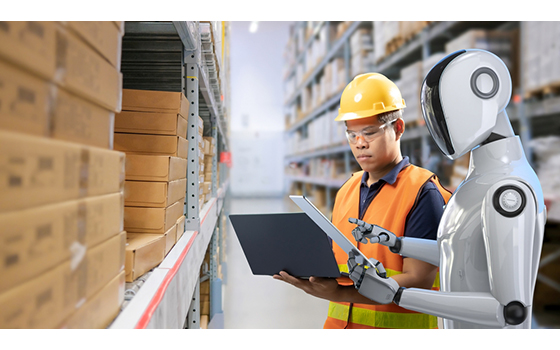
We are entering the era of Software-Defined Warehousing, where the Warehouse Execution System (WES) decouples logic from hardware. This requires powerful edge gateways capable of processing multi-protocol data streams in real time. This allows seamless coordination between robots, inventory systems, and human operators—creating a unified workflow.
The Rise of RaaS (Robotics-as-a-Service)
RaaS is transforming how companies adopt automation. Instead of large upfront investments, businesses can deploy robotics through subscription-based models.
Benefits include:
- Lower capital expenditure
- Faster deployment timelines
- Scalable solutions based on demand
The RaaS trend lowers the barrier to entry by shifting automation from a capital-heavy (CapEx) investment to an agile operational (OpEx) expense, allowing facilities to scale fleets dynamically based on seasonal SKU velocity.
AI and Edge Computing for Hyper-Intelligent Picking
AI-powered vision systems and edge computing enable real-time decision-making at the warehouse floor level. By processing data closer to the source, these systems reduce latency and improve picking accuracy.
Organizations like IBM highlight the importance of edge AI in enabling faster, more responsive industrial automation.
AMRs, AGVs, and Collaborative Robots (Cobots)
Autonomous Mobile Robots (AMRs), Automated Guided Vehicles (AGVs), and cobots are becoming the backbone of warehouse automation.
- AMRs offer flexibility and dynamic navigation
- AGVs provide reliable, fixed-path transport
- Cobots enhance human-robot collaboration
The strategic orchestration of AMRs, AGVs, and cobots creates a heterogeneous robotic fleet, where each asset is assigned tasks based on its specific navigation and payload capabilities.
Inbound Automation and High-Density AS/RS
Automated Storage and Retrieval Systems (AS/RS) are evolving toward high-density storage solutions, maximizing space utilization while improving retrieval speed.
Inbound automation, such as automated sorting and palletizing, further enhances operational efficiency and reduces manual handling.
Emerging Operational Trends: Sustainability and Cybersecurity
Green Warehousing
Sustainability is becoming a priority in warehouse design. While robotics is not inherently "green," well-designed automation can reduce energy use, material waste, and avoidable movement.
Robotics can support greener warehouse operations by:
- Optimizing travel routes: AMRs and warehouse execution systems can reduce empty runs, group nearby tasks, and optimize charging schedules to lower unnecessary energy use. Studies and vendor reports indicate that optimized routing can reduce robot travel distance by 20–40%, which can translate into energy savings of around 15–30% in automated warehouse operations.
- Improving inventory accuracy: Robotics, machine vision, and real-time data help reduce mispicks, excess replenishment, damaged goods, and reverse logistics. Automated picking systems can achieve accuracy rates above 99.5%, compared to typical manual accuracy rates of 96–98%, significantly lowering the volume of returns and associated transportation emissions.
- Increasing operational efficiency: High-density AS/RS, better slotting, and optimized fulfillment workflows can reduce handling, travel distance, and space required per order. High-density storage systems can increase storage capacity by 30–60% within the same footprint, while reducing internal travel distances by up to 50%, leading to lower energy consumption per order fulfilled.
According to the International Energy Agency, improving energy efficiency in industrial operations is key to achieving global sustainability goals.
Mitigating Cybersecurity Risks
As warehouses become more connected, cybersecurity risks increase. Robotic systems, IoT devices, warehouse platforms, cameras, sensors, edge computers, and cloud services can all become entry points for cyber threats.
The risk is significant because robotic assets are expensive and operationally critical. A cybersecurity incident can disrupt fulfillment, damage equipment, expose sensitive data, and cause costly downtime. For organizations using AMRs, cobots, automated storage systems, or AI-powered inspection tools, a breach can affect both data and physical operations.
Cybersecurity is also tied to worker safety. If a cyberattack, unauthorized access, or system failure causes a robot to behave unexpectedly, it can create collision, pinch-point, crush, or dropped-load hazards. This makes cybersecurity part of overall functional safety—not just an IT concern.
Key practices include:
- Secure network architecture: Segment IT and OT networks, isolate critical systems, and limit communication pathways.
- Regular software updates and patches: Maintain controlled patch management for firmware, operating systems, and warehouse software.
- Access control and monitoring: Use role-based access, multifactor authentication, secure remote access, and activity logging.
- Fail-safe design: Ensure robots can enter a safe state during faults or communication loss.
- Incident response planning: Define procedures for isolating devices, restoring operations, and safely returning robots to service.
The NIST Guide to Operational Technology Security highlights that OT environments have unique reliability and safety needs. In modern warehouses, protecting robotic systems means protecting both operations and workers.
How to Implement Warehouse Robotics Successfully
Utilizing Digital Twins and Simulation
Prior to physical deployment, digital twins enable engineers to simulate peak demand scenarios, allowing them to optimize real-time robot routing and resolve potential aisle congestion and charging constraints.
A Phased Approach to ROI
Successful robotics adoption requires a strategic, phased approach:
- Prioritize "quick-win" pilot programs, such as automated long-haul transport, before scaling to complex "goods-to-person" picking configurations.
- Scale gradually based on performance data
- Continuously optimize through analytics and feedback
This ensures measurable ROI while minimizing disruption to existing operations.
NEXCOM Robotic Solutions: The Hardware Backbone of Robotics Innovation
Optimizing these warehouse robotics trends requires more than software orchestration; it demands a deterministic, high-performance compute layer at the edge. NEXCOM Robotic Solutions (NexCOBOT Co. Ltd.) provides the industrial-grade hardware foundation necessary to move AI workloads out of the cloud and directly onto the warehouse floor.
By integrating NEXCOM Robotic Solutions' edge computing platforms, operations achieve:
- Low-Latency AI Inference: High-performance processing for real-time vision, SLAM, and path-planning.
- Industrial Interoperability: Flexible I/O and protocol support for seamless integration between heterogeneous robotic fleets, sensors, and legacy PLC systems.
- Deterministic Reliability: Ruggedized, fanless hardware engineered for 24/7 operation in harsh, high-vibration industrial environments.
Ready to future-proof your warehouse operations? Partner with NEXCOM Robotic Solutions to build a high-performance robotics infrastructure tailored to your needs.
- Related Links:
- What Is ROS 2? Architecture, ROS 1 vs. ROS 2, and Migration Guide
- What Is Manufacturing Process Automation? Types, Benefits, Use Cases, and 7 Implementation Steps
- Browse Other News:
- Smarter Warehouse & Logistics Inspection Starts at the Edge with NDiS B340
- NEXCOM Introduces RoboWIZ AI Robotics Platform at GTC Berlin
- All Blog News
