
Robot Safety: Protection Strategies for Industrial, Quadruped, and Humanoid Robots
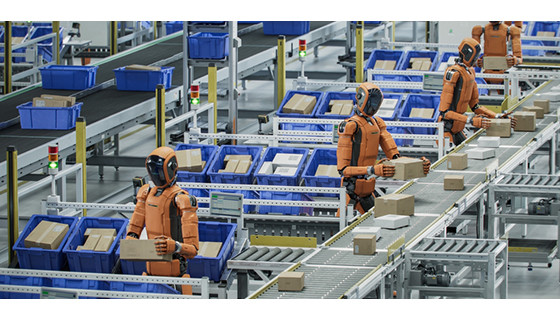
As robots move beyond traditional factory cages and into warehouses, inspection sites, energy facilities, and public-facing environments, robot safety is becoming more complex. Industrial robots, quadruped robots, and humanoid robots each introduce different safety risks, from mechanical collisions and pinch points to fall hazards, cybersecurity vulnerabilities, and unpredictable human-robot interaction.
For companies deploying robotics at scale, safety is no longer only about compliance. It is about building reliable systems that protect workers, reduce downtime, and support long-term automation growth. OSHA's robotics guidance recognizes that industrial robot systems include the robot itself, end effectors, control systems, power sources, sensors, and communication interfaces—meaning safety must be designed across the entire system, not just the robot body.
This guide explores practical protection strategies across industrial robot safety, quadruped robot safety, and humanoid robot safety, with a focus on how businesses can build safer, smarter robotics infrastructure.
Core Protection Mechanisms in Industrial Robot Safety
Industrial robots are widely used for repetitive, high-speed, and hazardous tasks such as assembly, material handling, welding, palletizing, and machine tending. Because these robots often operate with kinetic energy, high speed, and repeatable motion, industrial robot safety depends on deterministic control architecture, precise risk assessment, and rigorous adherence to ISO 12100 risk mitigation principles.
Physical Barriers and Electronic Safety Sensors
Traditional industrial robot safety often begins with physical separation. Safety fences, interlocked gates, and fixed guards help prevent workers from entering hazardous zones during robot operation.
However, modern automated facilities increasingly rely on electronic safeguarding devices, such as:
- Light curtains
- Safety laser scanners
- Pressure-sensitive mats
- Emergency stop devices
- Monitored standstills
- Speed and separation monitoring systems
These devices allow facilities to balance safety with productivity. By dynamically adjusting the robot's kinematic state—such as triggering speed-and-separation monitoring or Safe Torque Off (STO) based on human proximity—facilities can maintain continuous production without compromising safety.
Compliance with ISO 10218 and ISO 13849-1 Performance Levels (PL)
The recently published ISO 10218:2025 framework establishes the definitive safety baseline for industrial robotics, mandating strict Performance Levels (PL) for functional safety and, crucially, integrating cybersecurity directly into physical safety requirements. ISO describes ISO 10218-1 as a foundational safety standard that helps mitigate risks associated with industrial robot operation and supports safe design and implementation.
In practice, ISO 10218 is often used together with ISO 13849-1, which governs the safety-related parts of control systems (SRP/CS). Rather than mandating a single blanket requirement, ISO 10218-2:2025 now assigns a default performance level to each safety function in a dedicated annex — typically PLd, though this varies by function. Designers can either adopt this default value directly or deviate from it by conducting a more comprehensive risk assessment with additional documentation.
For example, a robotic work cell may require safety functions such as:
- Emergency stop
- Safe torque off
- Safe speed monitoring
- Safe position monitoring
- Safety-rated zone control
- Guard door interlocking
Each function should be designed, validated, and maintained according to the required risk level. This ensures that safety is not treated as an add-on feature, but as part of the robot system's core architecture.
Quadruped Robot Safety: New Challenges in Mobile Inspection Robotics
Quadruped robots are increasingly used for inspection, patrol, mapping, and remote monitoring in industrial environments. Unlike fixed industrial robots, quadruped robots move through dynamic spaces. They may climb stairs, walk over uneven ground, enter hazardous areas, and operate near human workers.
This makes quadruped robot safety more challenging than conventional robotic cell safety. Instead of relying only on fixed fences and static barriers, companies must manage changing environments, mobile risk zones, and unpredictable terrain.
Dynamic Safety Zones Replacing Physical Barriers
In unstructured, mobile environments, static perimeter guarding is obsolete. Facilities must deploy dynamic safety zones relying on real-time sensor fusion and predictive path-planning. Protective strategies must transition to onboard, real-time spatial perception driven by sensor fusion. This requires industrial-grade edge controllers capable of processing high-bandwidth data streams from LiDAR, 3D depth cameras, and spatial encoders with zero latency.
Fall-Zone Risk Assessment
Quadruped robots introduce a unique hazard: falling. While an industrial robot may create risks through its arm movement or end effector, a quadruped robot can trip, slip, lose balance, or fall from stairs, platforms, ramps, or elevated walkways.
A fall-zone risk assessment should evaluate:
- Loss of Traction: Probability of instability across variable friction surfaces (e.g., oil spills, grating).
- Kinematic Fall Radii: The maximum physical reach of the robot's mass if uncontrolled collapse occurs near human operators.
- Fail-Safe Posture Behavior: The robot's programmed kinematic response to power loss or emergency stop commands.
In high-risk environments, operators should define restricted routes, low-speed inspection paths, and human exclusion zones around elevated or unstable areas.
Battery Thermal Risks and Cybersecurity Concerns
Quadruped robots are usually battery-powered, which introduces thermal and electrical safety concerns. Sub-optimal thermal dissipation, mechanical impact, or unmonitored charging cycles drastically increase the probability of battery failure.
At the same time, quadruped robots are connected machines. They may transmit visual data, connect to cloud platforms, receive remote commands, and integrate with facility systems. This creates cybersecurity risks that can directly affect physical safety.
Under ISO 10218:2025 and the EU Cyber Resilience Act, cybersecurity is a mandated component of physical safety. Facilities must enforce zero-trust architectures, including:
- Battery management system monitoring
- Thermal detection and shutdown thresholds
- Secure charging procedures
- Encrypted communication
- Access control for remote operation
- Regular software and firmware updates
As robots become more connected, safety and cybersecurity must be treated as overlapping priorities.
Humanoid Robot Safety: Emerging Technology and Safety Risks
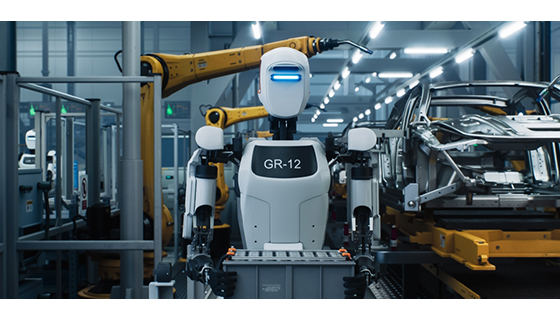
Humanoid robots are one of the most exciting areas in robotics, but they also introduce some of the most complex safety challenges. Unlike fixed industrial robots or quadruped inspection robots, humanoids are designed to operate in human-like environments and often perform tasks that require balance, dexterity, and direct interaction.
This makes humanoid robot safety especially important for factories, warehouses, service environments, healthcare support, logistics operations, and public spaces.
Reliability Challenges from High Degrees of Freedom (DoF)
Humanoid robots typically have high degrees of freedom, or DoF, meaning they can move many joints independently. This allows them to walk, reach, grasp, bend, and manipulate objects in ways that resemble human motion.
However, high DoF also increases safety complexity. More joints, actuators, sensors, and control loops increase the system's attack surface and mechanical failure points.
Key risks include:
- Dynamic Instability: Loss of balance during complex bipedal locomotion.
- Unintended Actuation: Erroneous servo commands leading to uncontrolled arm or manipulator movement.
- Payload Ejection: Dropping mass during complex manipulation tasks.
- Kinematic Pinch Points: Acute crush hazards generated by multi-axis joint interactions.
Humanoid safety designs must consider not only normal operation, but also abnormal states. Safety design must account for total system failure states, including uncontrolled payload drops, residual fall radii, and compromised sensor telemetry.
Addressing Regulatory Gaps with SOTIF and Safe-Shutdown Frameworks
Compared with industrial robots, humanoid robots are still an emerging category. While existing standards provide useful guidance, many humanoid applications do not fit neatly into traditional industrial robot safety frameworks.
This is where broader safety concepts become useful. SOTIF, or Safety of the Intended Functionality, focuses on risks that can occur even when a system is not technically malfunctioning. For example, a humanoid robot may correctly execute its software logic but still behave unsafely because it misunderstood its environment.
For humanoid robot safety, companies should consider:
- Safe-shutdown frameworks
- Redundant sensing
- Fail-safe posture design
- Controlled fall behavior
- Human proximity detection
- Cybersecurity protection
- Functional safety validation
- Scenario-based testing
Recent robotics safety discussions also emphasize the need to assess humanoid robots across multiple dimensions, including product safety, functional safety, safe AI, and cybersecurity.
Because humanoid robots may interact with untrained workers or the public, companies should adopt a conservative safety strategy before large-scale deployment.
NEXCOM Robotic Solutions: Building a Digital Safety Foundation for Robotics
As robots transition from statically stable cages to dynamically stable, autonomous navigation, safety is no longer purely mechanical. Managing stumble-recovery algorithms, dynamic proximity zones, and SOTIF protocols requires processing immense volumes of sensor telemetry in milliseconds. A software-defined safety architecture is only as reliable as the hardware executing it.
NEXCOM Robotic Solutions (NexCOBOT Co. Ltd.) provides the robot control solutions required to process these critical safety loops with zero latency. Engineered for harsh environments, NEXCOM platforms deliver the deterministic performance necessary to support:
- Real-Time Sensor Fusion: High-throughput processing for LiDAR, depth cameras, and spatial encoders.
- Fail-Safe Edge AI Inference: Enabling instant object classification and collision avoidance independent of cloud latency.
- Secure Hardware Architectures: Enforcing the encrypted communications and access controls mandated by ISO 10218:2025 and global cybersecurity frameworks.
By anchoring your robotics fleet on a ruggedized, deterministic computing foundation, your operation secures not just performance, but total regulatory compliance and human safety.
Explore NEXCOM's robot control solutions to architect a highly reliable control infrastructure for your next-generation robotics deployment.
- Related Links:
- Hybrid Video Surveillance Architecture: What Stays Local and What Moves to the Cloud
- What Is an Industrial Robot Controller? A Complete Guide
- Browse Other News:
- Hybrid Video Surveillance Architecture: What Stays Local and What Moves to the Cloud
- What is an Industrial IoT Gateway? The Ultimate Guide for Industry 4.0
- All Blog News
