
Comprehensive Guide to the ISO 10218 Robot Safety Standard for Modern Manufacturing
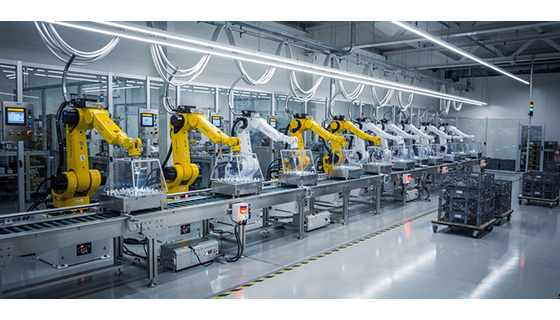
As factories adopt more automated production lines, collaborative robots, robotic cells, and intelligent manufacturing systems, robot safety has become a core requirement for modern operations. The ISO 10218 robot safety standard provides one of the most important frameworks for reducing risks in industrial robot applications.
For manufacturers, system integrators, and automation solution providers, understanding the ISO 10218 industrial robot safety standard is essential not only for compliance, but also for building safer, more scalable, and more reliable production environments. The latest ISO 10218-1 and ISO 10218-2 editions were published in 2025, reflecting the industry's shift toward more advanced robotics, collaborative applications, and integrated safety systems.
ISO 10218 Robot Safety Standard Overview
What is ISO 10218?
ISO 10218 is an international robot safety standard that defines safety requirements for industrial robots, robot systems, robot applications, and robot cells. It establishes the definitive regulatory baseline for the design, integration, and lifecycle maintenance of industrial robotic workcells.
This ISO 10218 robot safety standard overview is especially relevant for industries using robots in assembly, machine tending, welding, packaging, palletizing, material handling, and other industrial automation tasks. ISO describes ISO 10218-1 as a foundational safety standard that helps mitigate risks related to industrial robot operation and supports safe design and implementation.
Scope and Exclusions
The ISO 10218 standard focuses on industrial robots and robot systems used in industrial environments. It covers key safety topics such as mechanical design, control systems, protective measures, operational modes, system integration, validation, and information for use.
However, ISO 10218 is not intended to cover every type of robot in every environment. For example, personal care robots, medical robots, and some service robots may fall under other safety standards or regulatory frameworks. Consequently, system architects must explicitly define the Operational Design Domain (ODD), intended payloads, and foreseeable misuse scenarios before initiating the ISO compliance pathway.
Why Compliance Matters
Compliance with the ISO 10218 industrial robot safety standard helps companies reduce risks associated with robot motion, end effectors, unexpected startup, programming, maintenance, and human-robot interaction.
For manufacturers, compliance matters because it can help:
- Reduce workplace injuries and safety incidents
- Improve confidence in automated production lines
- Support smoother robot integration and commissioning
- Strengthen documentation for audits and inspections
- Eliminate unplanned downtime caused by nuisance safety trips
- Build a stronger foundation for collaborative robot applications
ISO 10218 Industrial Robots Safety Requirements: Part 1 vs. Part 2

ISO 10218-1: The OEM Mandate
ISO 10218-1 governs the bare-metal manipulator and its proprietary control system. It strictly applies to Original Equipment Manufacturers (OEMs), treating the robotic arm as an "incomplete machine" before integration. This framework specifies the foundational safety architectures, risk reduction mechanisms, and performance ratings that must be engineered into the hardware at the factory level.
To achieve compliance, OEMs must integrate specific safety-related control functions (SRCF), including:
- Inherent Mechanical Safety: Physical design measures that eliminate acute pinch points and limit kinetic energy transfer.
- Category 0 and Category 1 Safe Stops: Adherence to IEC 60204-1 standards for immediate power removal (Cat 0) or controlled deceleration (Cat 1) during emergency events.
- Kinematic Boundaries: Built-in Safely-Limited Speed (SLS) and Safely-Limited Position (SLP) monitoring.
- Secure Mode Selection: Fail-safe switching mechanisms between operational modes (e.g., Teach, Automatic, and Collaborative).
- Integration Documentation: Comprehensive technical specifications detailing residual risks for the end-integrator.
For system integrators and facility architects, verifying an OEM's ISO 10218-1 certification is the critical first step in procurement. It confirms that the core hardware possesses the deterministic safety capabilities required to survive a rigorous facility-level risk assessment.
ISO 10218-2: Integrator's Mandate for Workcell Safety
While Part 1 addresses the bare-metal robot, ISO 10218-2 governs the complete, deployed robotic workcell. This standard shifts the compliance liability directly onto system integrators, machine builders, and facility engineers tasked with transforming an "incomplete machine" into a safe, functional production asset alongside end effectors and auxiliary equipment.
Under ISO 10218-2, the integrator is responsible for engineering the holistic application environment, specifically addressing:
- Spatial Topology: Designing the workcell layout to map kinematic hazard zones and define highly controlled operator access points.
- Holistic Risk Assessment: Executing comprehensive ISO 12100 risk assessments that account for the entire integration lifecycle.
- Safeguarding Architecture: Deploying deterministic physical guarding, safety interlocks, and optoelectronic monitoring systems (e.g., area laser scanners).
- EOAT and Payload Dynamics: Mitigating acute hazards introduced by custom End-of-Arm Tooling (EOAT), gripping mechanisms, and varying workpiece inertia.
- Lifecycle Safety Protocols: Standardizing safe operational limits for teach-pendant programming, commissioning, maintenance, and LOTO (Lockout/Tagout) procedures.
- Functional Validation: Rigorous physical testing to document and validate that all integrated protective measures achieve the required Performance Level (PL).
The distinction is important: a robot may meet ISO 10218-1 requirements, but the complete robot cell still needs proper integration according to ISO 10218-2. In other words, safe hardware is merely the prerequisite; ISO 10218-2 ensures safe execution.
Key Updates in the Latest ISO 10218 Revision
Integration of ISO/TS 15066 Collaborative Robots
The 2025 revision officially absorbs ISO/TS 15066, elevating collaborative safety from a supplemental technical specification to a strict regulatory mandate. It provides guidance for collaborative robot applications, including safety-rated monitored stop, hand guiding, speed and separation monitoring, and power and force limiting.
This update matters because collaborative robots are now widely used in modern manufacturing. Instead of operating only behind fixed fences, robots may share workspaces with human operators. That means safety strategies must consider both planned collaboration and reasonably foreseeable human behavior.
New Robot Classes: Class I & Class II
The revision introduces Class I (Traditional/Fenced) and Class II (Collaborative) taxonomies to strictly define functional safety requirements based on kinematic capability and intended human interaction. This helps manufacturers and integrators better evaluate safety requirements based on robot capability, application risk, and operating context.
For modern manufacturing, this clearer classification supports better decision-making during system design. Companies can more effectively determine what safety functions, safeguarding methods, and validation processes are required before deployment.
Cybersecurity and Functional Safety
As robotic systems become more connected, cybersecurity is becoming directly linked to safety. Industrial robots may now connect to factory networks, edge computers, cloud platforms, vision systems, and remote monitoring tools. IT/OT convergence dictates that a compromised network packet can instantly trigger a kinetic hazard. ISO 10218:2025 explicitly mandates that physical safety architectures must be insulated against cybersecurity vulnerabilities.
Functional safety is also central to the updated standard. Safety-related control systems must perform reliably when hazards occur, whether that means stopping robot motion, limiting speed, restricting force, or triggering a safe state.
For manufacturers, this means ISO 10218 compliance should be supported by a broader safety architecture that includes:
- Safety-rated control functions
- Secure communication
- Access control
- Risk-based validation
- Reliable edge computing platforms
- Documented maintenance and update procedures
The Four Collaborative Modes in the ISO 10218 Robot Safety Standard
Collaborative robot applications require careful control of how humans and robots share space. ISO has identified four key collaborative techniques: monitored standstill, hand guiding, speed and separation monitoring, and power and force limiting.
Safety-Rated Monitored Standstill
Safety-rated monitored standstill triggers a Category 2 Safe Stop (maintaining drive power) when a human breaches a defined safety volume, enabling instantaneous resumption of the cycle once the area is cleared. The robot can resume operation once the operator leaves the hazardous area and the system confirms that conditions are safe.
This mode is commonly used when humans occasionally need to enter a robot cell for loading, unloading, inspection, or adjustment.
Hand Guiding
Hand guiding allows an operator to manually guide the robot through a task or teaching process. This mode is useful for programming, positioning, or assisting with specific movements.
However, hand guiding still requires proper safety design. The system must ensure that robot motion remains controlled and that the operator is protected from unexpected movement, excessive force, and surrounding hazards.
Speed and Separation Monitoring (SSM)
Speed and Separation Monitoring, or SSM, allows the robot to adjust its speed based on the distance between the robot and human operators. When a worker is far away, the robot can operate at a normal speed. As the worker gets closer, the robot slows down or stops.
This mode is valuable for flexible manufacturing environments where humans and robots need to work in shared or nearby spaces.
Power and Force Limiting (PFL)
Power and Force Limiting, or PFL, controls the robot's force, torque, speed, and contact behavior to reduce injury risk if contact occurs. This mode is often associated with collaborative robots designed for direct human-robot interaction.
Crucially, a PFL-rated manipulator is instantly invalidated if deployed with non-compliant End-of-Arm Tooling (EOAT), such as sharp grippers, high-inertia payloads, or thermal hazards.
Ensuring ISO 10218 Compliance Through Risk Assessment
Risk assessment is the foundation of ISO 10218 compliance. Before a robot system is deployed, companies should identify hazards, estimate risk levels, define protective measures, and validate whether those measures effectively reduce risk.
A practical risk assessment should cover:
- Robot motion range
- End effector design
- Workpiece hazards
- Operator access points
- Maintenance and troubleshooting tasks
- Manual loading and unloading
- Unexpected startup
- Energy isolation
- Collaborative workspace design
- Safety-related control functions
The risk assessment is a living document. It must be strictly re-validated upon any modification to the payload, EOAT, system firmware, or spatial topology of the workcell.
Common Pitfalls in Robot Integration
Many safety issues occur not because the robot itself is unsafe, but because the integration process is incomplete.
Common pitfalls include:
- Assuming a collaborative robot is safe without application-level risk assessment
- Ignoring end effector and workpiece hazards
- Placing emergency stop devices in hard-to-reach locations
- Failing to validate safety functions after installation
- Overlooking maintenance and non-routine operations
- Using poorly defined pedestrian and robot traffic zones
- Deploying safety logic on edge controllers lacking hardware-level security or encrypted communication channels.
- Not providing sufficient operator training
To avoid these issues, manufacturers should involve safety engineers, system integrators, operators, and maintenance teams early in the design process.
NEXCOM Solutions for Safe Industrial Robot Integration
Safe industrial robot integration requires more than compliant mechanical arms; it demands a deterministic, high-performance computing foundation capable of executing safety logic, sensor fusion, and cyber-secure communications with near-zero latency.
The 2025 updates to ISO 10218 bridge the gap between physical mechanics and digital control. To achieve compliance in complex, collaborative environments, integrators must rely on hardware that will not fail under industrial duress.
NEXCOM provides the edge robotic controllers and endpoint cybersecurity solutions required to architect compliant, highly responsive automated workcells. Our edge solutions empower integrators to deploy:
- Deterministic Safety Logic: High-reliability processing necessary for calculating dynamic Speed and Separation Monitoring (SSM) in real-time.
- Hardware-Level Cybersecurity: Embedded TPM 2.0 and secure boot architectures to meet the new IT/OT cyber-physical safety mandates of ISO 10218:2025.
- Uncompromised Sensor Fusion: Broad I/O flexibility to seamlessly integrate safety laser scanners, light curtains, 3D vision systems, and safety PLCs into a unified control architecture.
For manufacturers implementing the ISO 10218 robot safety standard, NEXCOM helps provide the digital infrastructure needed to connect robot systems, process safety-critical data, and support reliable automation performance.
Contact NEXCOM today to discuss the right solution for your industrial automation needs.
- Related Links:
- Hybrid Cloud Video Surveillance Architecture: What Stays Local and What Moves to the Cloud
- What Is an Industrial Robot Controller? A Complete Guide
- Browse Other News:
- Hybrid Cloud Video Surveillance Architecture: What Stays Local and What Moves to the Cloud
- What is an Industrial IoT Gateway? The Ultimate Guide for Industry 4.0
- All Blog News
